CURATED ROUTES TO Morocco?
Real transit times, verified train links, and self-drive mountain loops across Morocco. No fluff, no tour operator markups.
How many days do you need in Morocco?
Compare realistic routes by duration, transit mode, and travel pace. No impossible driving schedules, verified ONCF rail connections, and transparent travel friction ratings.
| Route Name | Ideal Days | Transit Mode | Key Highlights | Transit Friction |
|---|---|---|---|---|
| The Imperial Railway Tangier → Rabat → Fès → Marrakech | 7 Days | ONCF Al Boraq & Train | High-speed rail, historic medinas, architecture, easy city walks | ● Easy |
| Atlas Foothills & Atlantic Breeze Marrakech → High Atlas → Essaouira | 7 Days | Rental Car | Souks, mountain Berber villages, Atlantic ramparts, fresh seafood | ● Easy |
| Southern Dunes & Kasbahs Marrakech → Dadès → Merzouga → Fès | 10 Days | Rental Car / SUV | Tizi n’Tichka pass, Aït Ben Haddou, Erg Chebbi Sahara, desert camps | ● Moderate |
| Northern Rif & Atlantic Coast Tangier → Chefchaouen → Rabat → Casablanca | 10 Days | ONCF Rail + Bus CTM | Blue pearl alleys, Kasbah museums, coastal promenades, Art Deco heritage | ● Easy |
| The Grand Moroccan Loop Casablanca → Chefchaouen → Fès → Sahara → Marrakech | 14 Days | Self-Drive & Private 4×4 | Full imperial tour, cedar forests, Todra Gorge, desert dunes, Atlantic finish | ● Adventurous |
DETAILED ITINERARIES built on real transit times.
Field-verified road trips and train connections designed without artificial rush. Pick your tempo, download the offline resources, and travel with zero surprises.
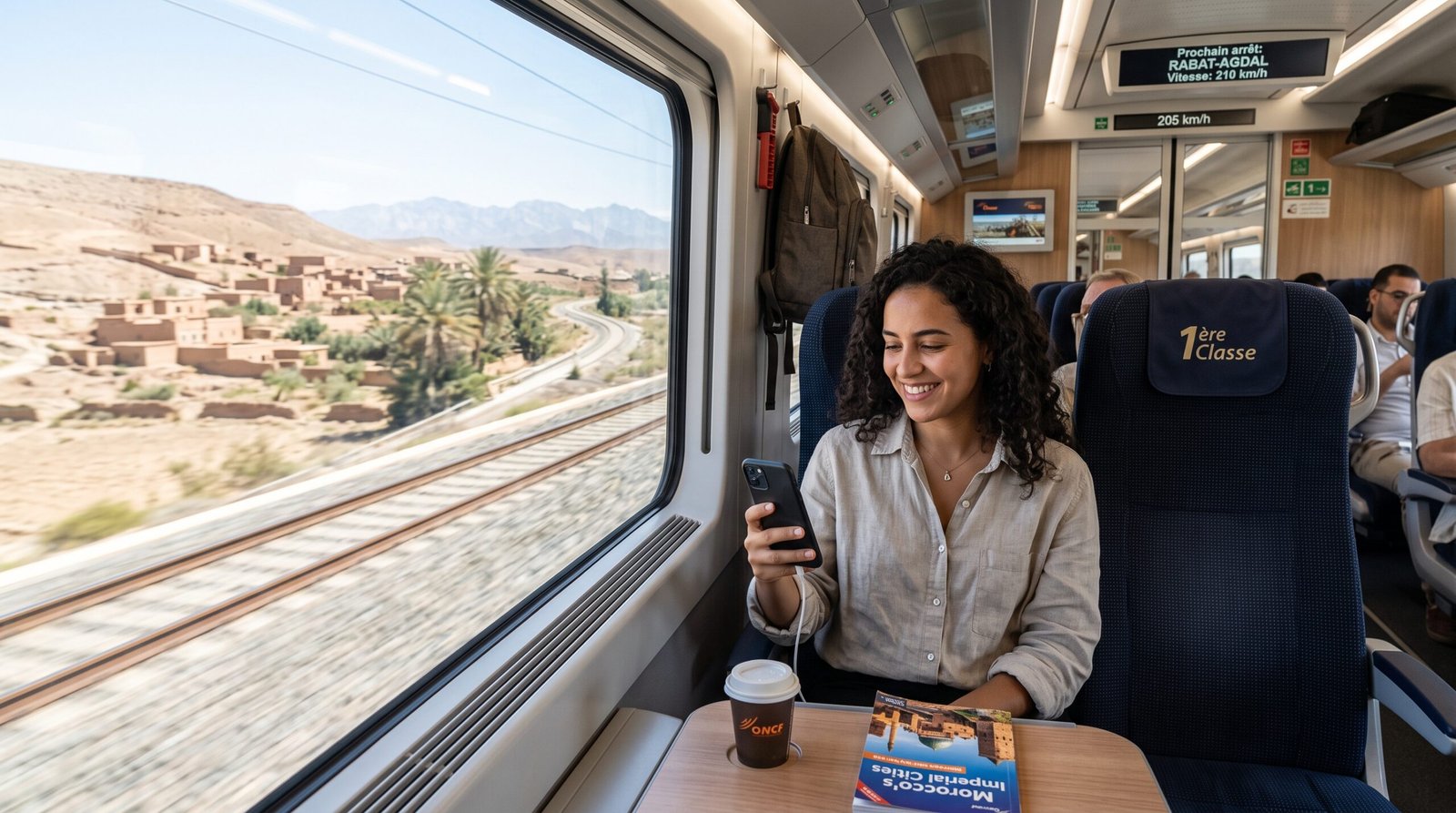 100% Car-Free · Train Only
The Imperial Rail Journey
Connect Morocco’s historic imperial capitals at high speed without navigating metropolitan traffic or booking domestic flights.
- Verified Rail Times: 2h10m between Tangier and Casablanca on the Al Boraq high-speed line; 2h40m between Rabat and Fès via Al Atlas 1st Class with air conditioning and reserved seating.
- Smart Setup: Purchase tickets directly on the official ONCF portal up to 30 days ahead. Activate your local prepaid travel eSIM prior to touchdown at CMN airport so you can access mobile QR-tickets and seat assignments instantly without queueing at station ticket counters or depending on station Wi-Fi.
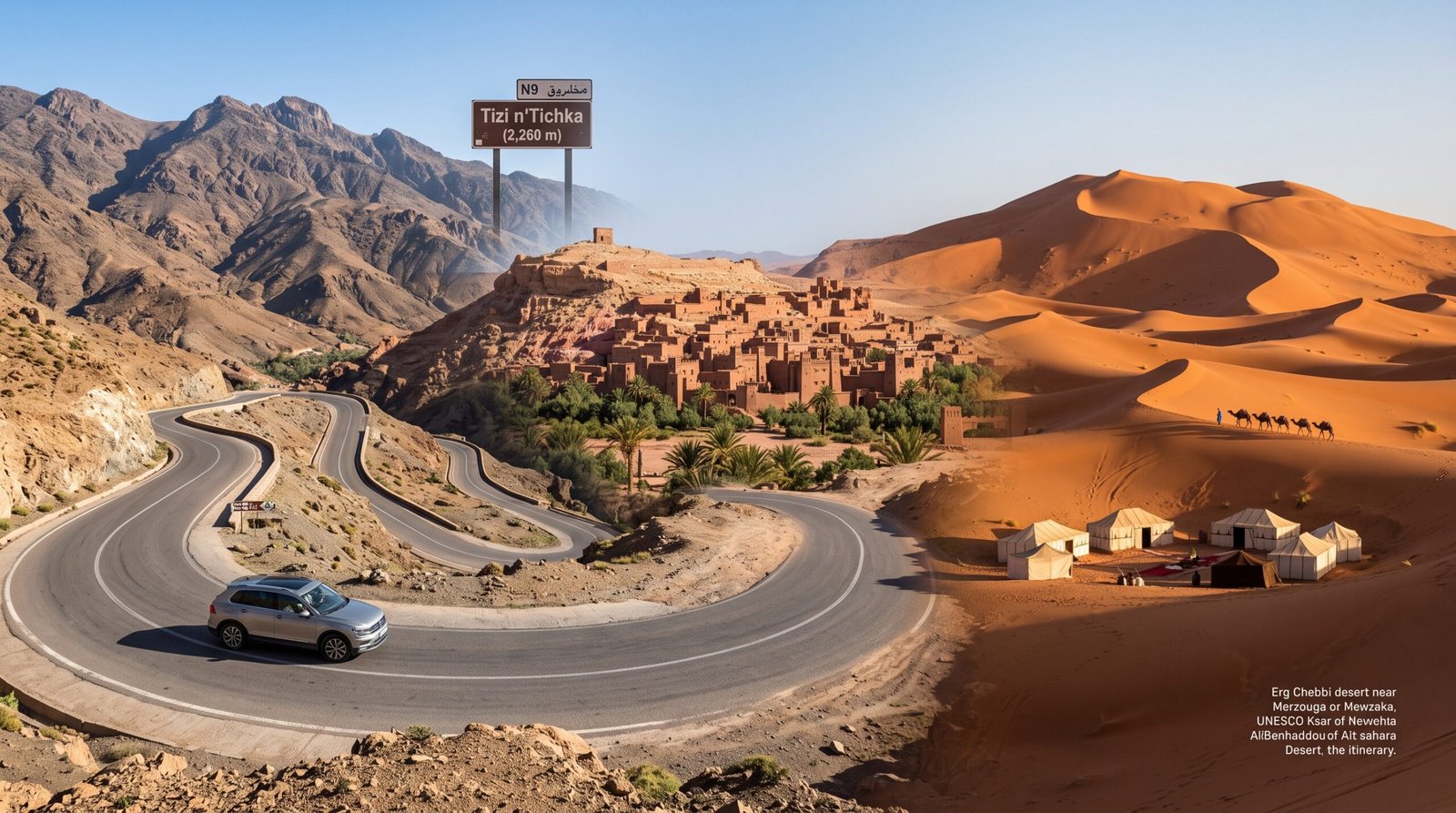 Most Popular · Road Trip
High Atlas & Sahara Dunes
Cross dramatic 2,260-meter mountain passes, explore ancient mud-brick UNESCO ksar fortresses, and spend two nights immersed in Erg Chebbi’s towering red dunes.
- Self-Drive Recommendation: Reserve an elevated crossover or mid-size SUV via a trusted Moroccan rental provider for optimal ground clearance through the Dadès curves. Time your Tizi n’Tichka mountain crossing strictly during daylight hours to avoid high-altitude fog and heavy lorry traffic.
- Connectivity Critical: Cellular connectivity dips along mountain canyons. Download offline vector maps (Google Maps or Maps.me) before departing Marrakech, and secure an eSIM with reliable coverage across national routes N9 and N10.
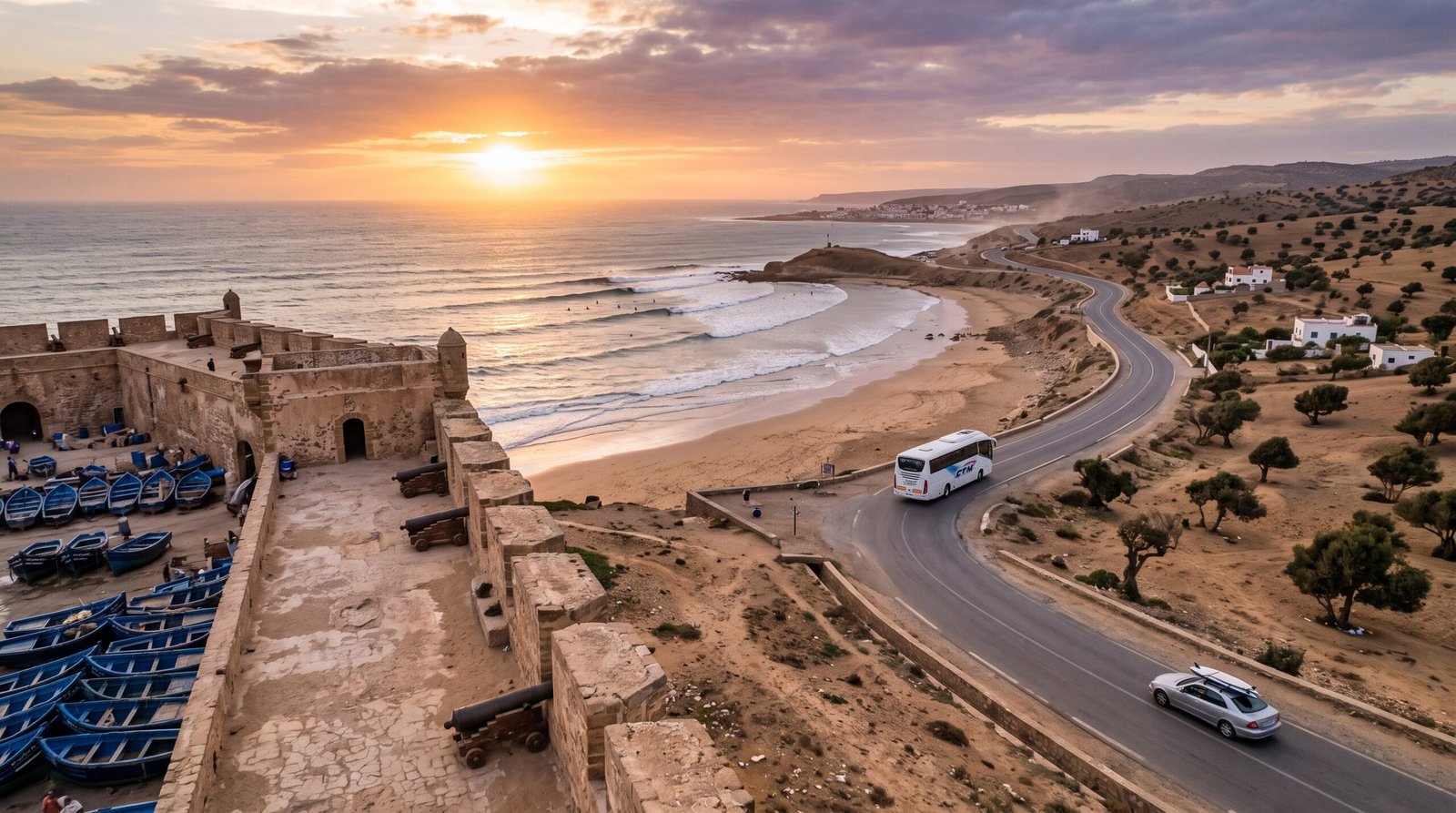 Ocean Breeze · Surf
Atlantic Coastline & Ancient Ramparts
Trade medina hustle for sweeping trade winds, Portuguese sea-facing ramparts, argan tree valleys, and legendary longboard point breaks.
- Transport Options: Air-conditioned CTM or Supratours coach buses operate frequent coastal routes between Essaouira and Agadir. If traveling with surfboards or seeking secluded cove stops along the R301 scenic coastal road, opting for a one-way rental car pickup in Essaouira and drop-off in Agadir offers total independence.
- Local Logistics: Direct shared transfers connect Imsouane to Taghazout daily. Book seaside riads and surf lodgings with verified workspace internet if combining coastal downtime with remote work.
ESSENTIAL TRANSIT & TOOL HUB everything you need on the ground.
Before you step off the plane, secure the three foundational pillars of your Moroccan journey: verified train seats, instant connectivity, and transparent car hire.
High-Speed Rail & Train Guides
Navigate Morocco’s world-class rail network seamlessly between Tangier, Rabat, Casablanca, and Marrakech.
- Al Boraq (320 km/h): Tangier to Casablanca in 2h10m. Spacious, silent, with dedicated luggage racks.
- First Class Pro-Tip: Upgrade for ~$10 extra for guaranteed assigned seating, quiet coaches, and power sockets.
- Official Timetables: Avoid third-party surcharges by booking direct via the ONCF portal up to 30 days prior.
Stay Connected: eSIM Hub
Instant high-speed 4G/5G data coverage upon touchdown at Casablanca (CMN) or Marrakech (RAK) without changing physical SIM cards.
- Zero Airport Airport Lines: Skip aggressive terminal kiosk hawkers and passport verification delays.
- Network Coverage: Roams automatically across Maroc Telecom & Inwi for reliable coverage in medinas and Atlas roads.
- Flexible Plans: 5GB to 20GB bundles starting from $8, ideal for WhatsApp navigation, booking confirmations, and ride-hailing.
Car Rental & Driving Rules
Essential guidelines to navigate Moroccan motorways, mountain hairpins, radar checkpoints, and local rentals without friction.
- Highway Tolls (ADM): Keep 20–50 MAD cash notes handy for autoroute booths (cash remains faster than international credit cards).
- Gendarmerie & Radars: Strict speed compliance enforced entering towns (60 km/h) and roundabouts (priority inside unless marked).
- Vetted Providers: Rent through aggregators with verified zero-excess deposit options and unlimited mileage for mountain routes.
FREQUENTLY ASKED QUESTIONS field realities & transit clarity.
Clear, practical answers regarding Moroccan trains, airport transfers, and mountain driving safety—derived from real-world road experience.
Can you explore Morocco without renting a car?
Yes, absolutely. Morocco features the most modern passenger rail network in Africa, managed by ONCF.
- High-Speed Rail (Al Boraq): Connects Tangier to Kenitra, Rabat, and Casablanca at 320 km/h in just 2 hours and 10 minutes.
- Intercity Lines (Al Atlas): Connects Fès, Meknès, Rabat, Casablanca, and Marrakech with frequent air-conditioned 1st and 2nd class departures.
- Connecting Coaches: For destinations untouched by rail (such as Chefchaouen in the north or Essaouira on the coast), state-owned CTM and ONCF’s affiliate Supratours operate modern, punctual coaches directly synchronized with train arrivals.
Takeaway: You only need a rental vehicle or a 4×4 private excursion if you intend to cross the High Atlas passes and deep desert dunes of Merzouga (Erg Chebbi).
What is the best route between Casablanca Airport and Marrakech?
When landing at Mohammed V International Airport (CMN), travelers have two vetted options depending on their schedule:
Option A: By Train (Best for Solo & Daytime)
Take the ONCF airport shuttle train located directly at level -1 of Terminal 1 to Casa-Oasis station (approx. 25 min) or Casa-Voyageurs (approx. 35 min). From there, board the Al Atlas train directly to Marrakech station (~2h40m). Total cost: ~$15–$20 USD in First Class.
Option B: Private Transfer (Best for Groups & Night Arrivals)
Takes ~2h30m via the smooth A3 toll motorway. Pre-booking a private driver costs roughly €100–€140 and delivers you straight to your riad or hotel in Marrakech, bypassing station transfers when carrying bulky luggage.
Is driving through the High Atlas Mountains safe for tourists?
Yes, but it requires mindful driving habits. The primary route crossing the High Atlas from Marrakech towards Ouarzazate and the Sahara is the N9 National Road via the Tizi n’Tichka pass (2,260m altitude).
- Pavement Quality: The highway has undergone massive widening projects and is fully asphalted with guardrails along steep drops.
- Daylight Guideline: Always schedule your mountain crossing during daytime hours. High-altitude mountain fog, unlit hairpins, and slow-moving trucks make night driving stressful and unnecessarily hazardous.
- Winter Weather (Dec–Feb): Snow and black ice can temporarily slow traffic over the pass. Monitor Moroccan transport alerts (ADM / Equipment Ministry) and keep offline maps downloaded in advance.