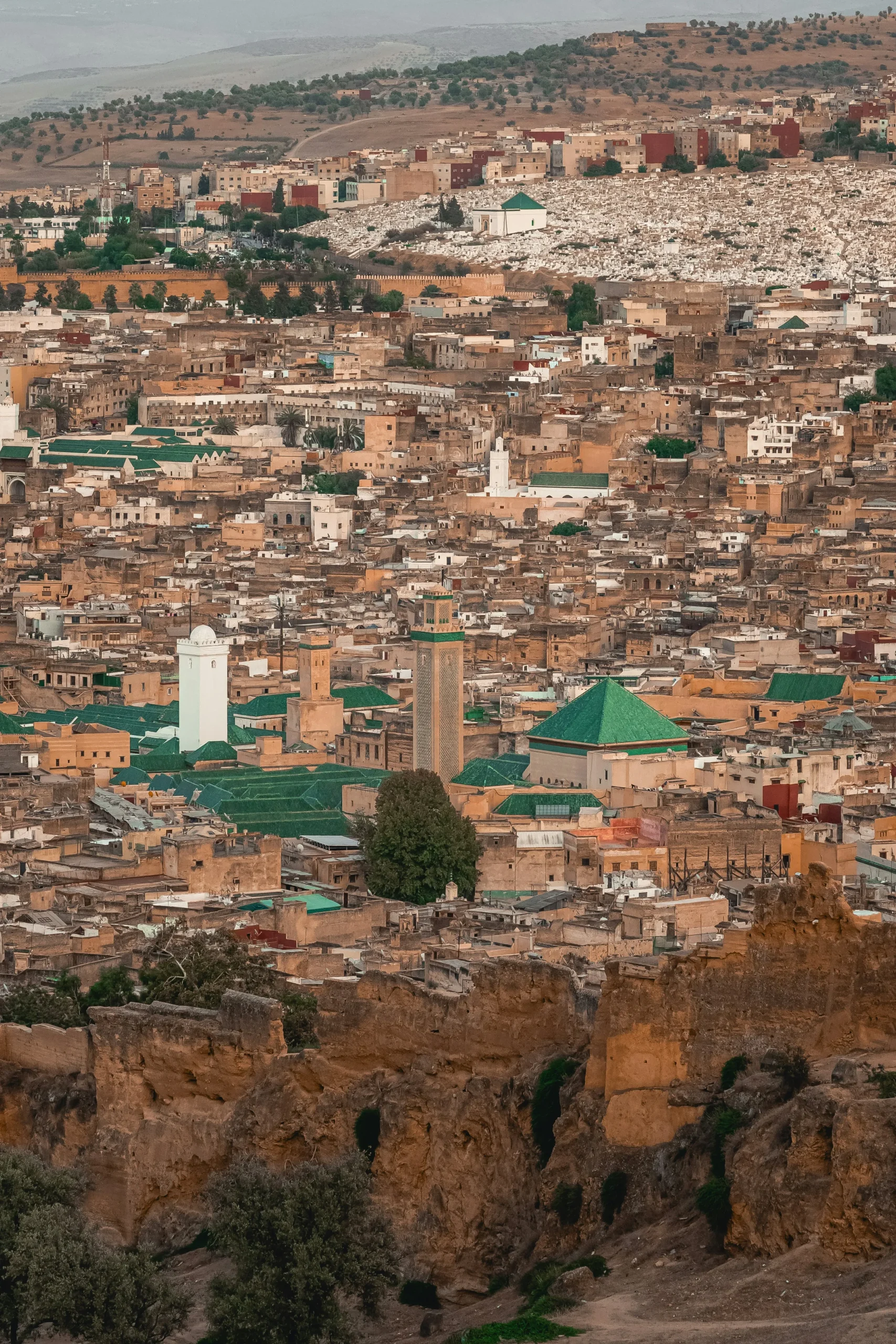
Fes Travel Guide The Ancient Medina 2–3 Days in Morocco's Cultural Heart Transit & Itineraries
Explore Fes with practical guidance on the medina, transport connections, and historic sights. ONCF timetables and fares can change; use ONCF’s current journey planner before you travel.
Cash, Cards & ATMs
Payment methods vary by business: some hotels, restaurants, and shops accept cards, while smaller vendors may prefer cash. ATM availability and cash levels can vary, and we cannot confirm a regular Friday or holiday shortage. Carry an amount of cash that suits your plans, keep it secure, and check your bank’s fees and limits. For more currency guidance, read our first-time travel tips.
The "Closed Street" Redirection Tactic
Some people may offer directions or services in busy parts of the medina. You can politely decline if you do not need help, and verify your route with your offline map or accommodation. Save key locations before arrival and consider mobile data via our Morocco connectivity guide to ensure continuous location access under high stone archways.
Fes Cost & Daily Logistics Matrix
Real-world expense projections and transit profiles based on current municipal fees and verified traveler receipts.
| Travel Profile | Lodging / Night | Daily Food & Dining | Local Transit & Transfers | Key Experiences & Access |
|---|---|---|---|---|
| Eco / Autonomous | 250–450 MAD ($25–$45) Authentic guesthouse patio | 120–180 MAD ($12–$18) Street bissara, brochettes, bakery | 10–25 MAD ($1–$2.50) Shared petit taxi, Line 16 bus | 20–50 MAD ($2–$5) Bou Inania & Nejjarine entrance |
| Mid-Range Comfort | 750–1,400 MAD ($75–$140) Restored riad with breakfast | 350–550 MAD ($35–$55) Café Clock, Ruined Garden | 60–120 MAD ($6–$12) Private petit taxi, luggage porter | 250–500 MAD ($25–$50) Ceramic workshop, licensed guide |
| Luxury & Curated | 2,500–5,500 MAD ($250–$550) Palais Faraj or Riad Fès suite | 850–1,600 MAD ($85–$160) Nur tasting menu, fine riad tables | 180–350 MAD ($18–$35) Private Mercedes airport transfer | 1,200–2,200 MAD ($120–$220) Private Volubilis car, VIP hammam |
Explore the Fes Circuit
Choose a day to see its stops on satellite imagery. Medina paths are schematic; use the place names and local directions for on-the-ground navigation.
The Complete 2 to 3-Day Fes Operational Circuit
A step-by-step route balancing sacred Marinid architecture, centuries-old artisanal workshops, and quiet rooftop sanctuaries.
The Sacred Medieval Core & Chouara Tanneries
- Walking Distance: 6.8 km within pedestrian medina
- Estimated Time: 7.5 hours (relaxed pace)
- Starting Point: Bab Bou Jeloud (The Blue Gate)
- Key Gate Access: Bab Rcif / Place Batha
Morning: Marinid Masterpieces along Talaa Kebira
Commence your morning at 08:30 at Bab Bou Jeloud, the ornate blue-tiled western portal entering Fes el-Bali. As confirmed in our practical Fes travel guide research, early morning offers quiet photography conditions before shops unpack their wares. Descend along Talaa Kebira to reach the Bou Inania Madrasa (admission: 20 MAD). Commissioned in 1351 by Sultan Abou Inan Faris, it is the only Islamic seminary in Fes that also operated as a full congregational Friday mosque. Observe the flawless equilibrium of the carved stucco lace, polychrome zellige tiles, and ancient cedarwood beams.
Continue down the gentle incline past the historic water clock toward the Nejjarine Museum of Wooden Arts & Crafts (admission: 20 MAD), housed in an impeccably restored 18th-century trading fondouk. Climb to its rooftop terrace for your first elevated view over the green tiled roofs of the medina.
Midday: Al Quaraouiyine & Garden Dining
Progress deeper toward the spiritual core of Fes: the University and Mosque of Al Quaraouiyine. Founded in 859 AD by Fatima al-Fihri, this revered sanctuary is verified by UNESCO as the world's oldest continually operating university. While the prayer hall is reserved for Muslim worshipers, non-Muslim visitors can admire the sweeping courtyard, horseshoe arches, and delicate marble fountains through its open decorative brass doorways. Adjacent lies the Al-Attarine Madrasa (admission: 20 MAD), celebrated for its intimate proportions and exquisite calligraphic friezes.
For lunch, slip away from the thoroughfares into The Ruined Garden to sample seasonal wild herb dips, handmade sourdough flatbreads, and slow-cooked meat pastilla in a cool courtyard. Alternatively, visit the multi-story Café Clock near Bou Jeloud for their signature spiced camel burger and spiced house-brewed teas.
Afternoon: Copper Beats & Chouara Leather Vats
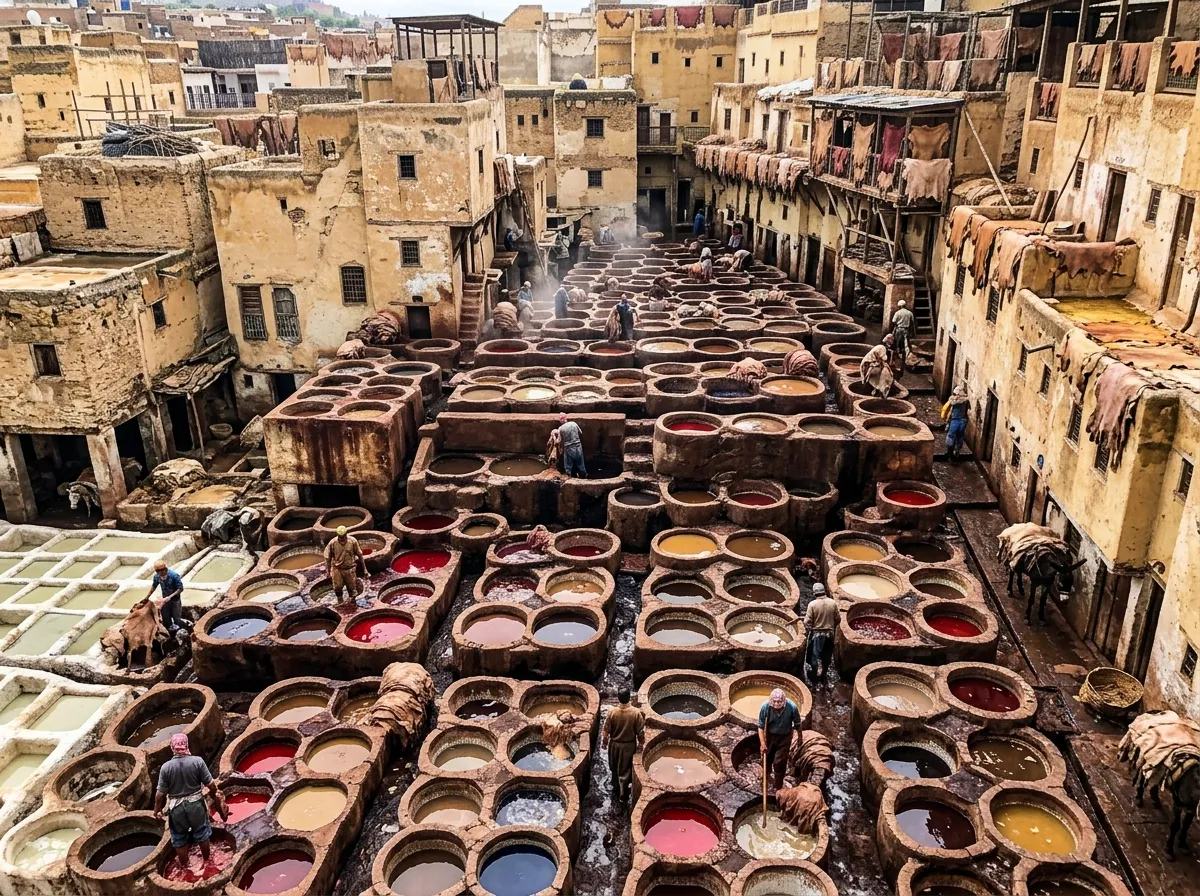
After lunch, follow the rhythmic clanging of copper hammers to Place Seffarine, where master metalsmiths hand-shape giant cooking vessels and brass tea trays over open anvils. From here, wind through the spice souks toward the world-renowned Chouara Tanneries. To observe the tanners working in the stone pits filled with natural pigeon guano, limestone, and vegetable dyes (saffron, poppy, pomegranate), head to an established leather boutique balcony.
Boutique shopkeepers will hand you a sprig of fresh mint to counteract the pungent natural ammonia odor. If you do not intend to buy a leather jacket, slippers, or weekend bag, agree upfront on a modest tip of 10 to 20 MAD ($1–$2) per person for the viewpoint. To skip negotiations entirely, book a certified local guide through our trusted partner platform below.
Imperial Splendor, The Mellah & Ceramic Masters
- Transit Mode: Petit taxi + foot traverse
- Estimated Time: 6.5 hours
- Starting Point: Royal Palace (Dar al-Makhzen)
- Key Landmark: Ain Nokbi Pottery Quarter
Morning: The Royal Gates and Jewish Mellah
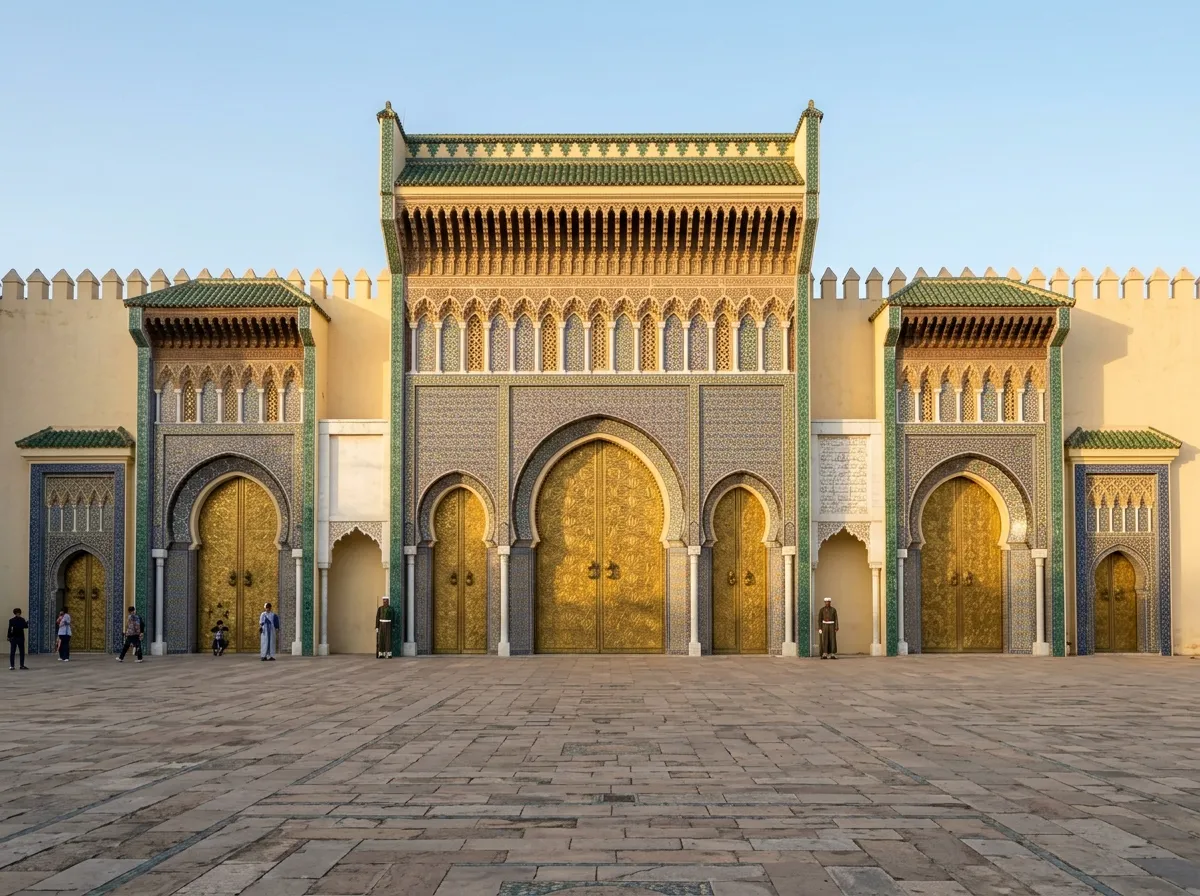
Dedicate your second morning to Fes el-Jdid, founded in the 13th century. Begin at the grand plaza fronting the Royal Palace (Dar al-Makhzen). While the interior is closed to the public, its seven monumental golden brass doors, sculpted by master craftsmen and surrounded by tens of thousands of handmade zellige tiles, represent a high point of Moroccan decorative art.
From the palace, walk into the historic Jewish Mellah. Notice how the architecture contrasts sharply with Fes el-Bali: here, houses feature exterior windows, overhanging wooden balconies, and wrought-iron balustrades. Visit the 17th-century Ibn Danan Synagogue (entry: 20–30 MAD donation), preserved with its original wooden benches, historic Torah scrolls, and underground ritual mikveh, followed by a walk through the whitewashed Jewish Cemetery.
Midday: Scenic Overlook Lunch
Take a 10-minute red petit taxi (15–20 MAD on the meter) to L'Amandier at Palais Faraj. Perched atop the southern ridgeline, its shaded terrace provides panoramic vistas overlooking the entirety of Fes el-Bali alongside fresh salads, pastillas, and grilled river fish.
Afternoon: Master Artisans of Ain Nokbi
After lunch, direct your taxi to Ain Nokbi, the dedicated ceramics and pottery quarter located just outside the eastern walls. Tour the family-owned workshops at the Art Naji cooperative to see the complete lifecycle of Moroccan pottery: master potters shaping gray clay extracted from local hillsides, kilns fueled cleanly by olive pits, and artisan maâlems painstakingly chiseling fired glaze into tiny tesserae for zellige tile tables.
As the late afternoon sun softens, take a taxi up to the hilltop Marinid Tombs (Borj Nord). Sit along the historic stone crest at sunset to witness the evening Call to Prayer (Adhan) ring out across the entire valley—an essential memory emphasized in every detailed Fes travel guide.
Planning to continue your adventure toward Midelt, Erfoud, and the Erg Chebbi dunes? Check our detailed 10-day High Atlas and Sahara itinerary. If you plan to rent an autonomous vehicle, compare vetted suppliers with full zero-deductible coverage through our Morocco car rental guide.
Culinary Immersion OR Volubilis Roman Ruins
- Option A: In-Medina Cooking Masterclass
- Option B: Day Trip to Volubilis & Meknes
- Road Distance (Opt B): 170 km round-trip
- Vehicle Type: Private Driver or Rental Car
Option A: Gastronomic Apprenticeship in Fes el-Bali
If you prefer an easy-paced cultural day inside the walls, book an immersive morning cooking workshop at The Clock Kitchen or the culinary school at Palais Amani. Your session starts with a guided market walk through local vegetable and spice souks to select seasonal produce, fresh cilantro, saffron strands, and preserved lemons. Return to the kitchen terrace to master traditional pastry rolling for pigeon or chicken pastilla, build an authentic lamb tagine with prunes, and balance Moroccan mint tea.
Spend your final afternoon indulging in an authentic scrub and massage ritual inside a historic marble bathhouse, such as the vaulted hammam at Riad Laaroussa.
Option B: The Roman Mosaics of Volubilis & Imperial Meknes
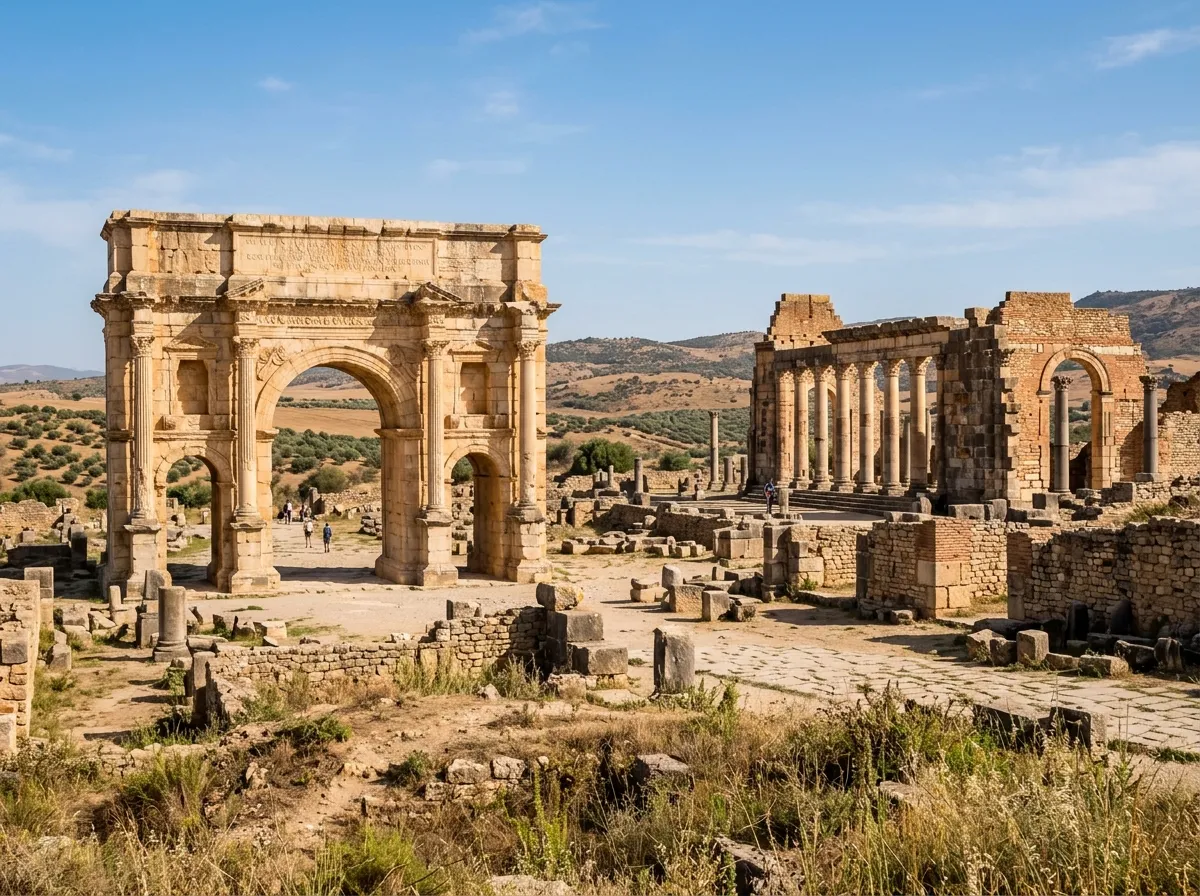
For history lovers, hire a private licensed driver or self-drive westward through rolling olive groves to the UNESCO World Heritage site of Volubilis (Walili) (admission: 70 MAD). Dating from the 3rd century BC, this ancient Roman outpost retains vivid in-situ mosaics including the Labors of Hercules and Diana Bathing, alongside the monumental Arch of Caracalla.
Next, stop briefly at the whitewashed hillside pilgrimage town of Moulay Idriss Zerhoun for lunch, then spend the afternoon in the imperial city of Meknes. Marvel at the intricate green tiles of Bab El-Mansour, explore the cavernous royal granaries and stables of Heri es-Souani, and visit the serene Mausoleum of Moulay Ismaïl before your 45-minute return drive to Fes.
Where to Stay: Verified Historic Riads with Seamless Access
Selecting the right riad in Fes requires evaluating luggage accessibility and gate proximity. These handpicked properties offer exceptional service, authentic decor, and convenient drop-off points.
Riad Fès – Relais & Châteaux
Access Gate: Place Batha (Paved 3-min walk)
A five-star benchmark blending Andalusian, Moorish, and contemporary baroque courtyards. Features an outdoor swimming pool, luxury spa, and a famed rooftop cocktail bar with 360-degree views across Fes el-Bali.
- Luggage concierge escort from Batha parking
- Elevated cocktail terrace with Atlas Mountain views
- Quiet residential cul-de-sac away from souk noise
Palais Faraj Suites & Spa
Access Gate: Bab Ziat (Direct vehicle driveway)
An aristocratic palace perched on the southern ridgeline overlooking the medina. Designed by architect Jean-Baptiste Barian, it delivers true five-star luxury with effortless taxi access right to the lobby door.
- Zero luggage rolling over medina cobblestones
- Exceptional on-site fine dining at L'Amandier
- Authentic private hammam & heated outdoor pool
Riad Laaroussa & Dar Roumana
Access Gate: Bab Guissa / Aïn Zleten
Two boutique sanctuaries run with pride. Riad Laaroussa is set around a 17th-century courtyard of mature orange trees with a heated pool; Dar Roumana is known for its tiled walls and seasonal Franco-Moroccan kitchen.
- Personalized riad porter dispatch on arrival
- Exceptional, seasonal multicourse dinners
- Quiet courtyards for peaceful night rest
Fes Transit Protocols: ONCF Trains & Airport Taxis
Route planning for Fès-Ville and Fès-Saïss. Timetables and fares are date-sensitive; last reviewed 6 November 2026. Consult ONCF for the live schedule.
ONCF Train Connections (Gare de Fès-Ville)
ONCF serves Fès-Ville with connections to major cities, including Casablanca, Rabat, and Tangier. Routes, departure times, journey durations, and fares may change. Check ONCF’s live schedule before travel.
- Plan any route: Select your origin, Fès-Ville, travel date, and preferred departure in the official ONCF Voyages journey planner. Check the live timetable, available connections, ticket classes, and current fare before purchase.
- At the station: Confirm the destination and departure on the station displays and your ticket. Arrive with enough time to locate the platform; allow extra time if you need assistance or are traveling with luggage.
Exploring Morocco by rail? Follow our curated 7-day Morocco train itinerary for seamless multi-city connections.
Fes-Saïss Airport (FEZ) Protocol
Fès-Saïss Airport is outside the historic center. For current transport choices, pickup points, and fares, check airport information or ask your accommodation before arrival.
- Taxi or pre-arranged transfer: Confirm the fare, payment method, destination gate, and pickup point with the driver or provider before departure. Ask your riad which gate or vehicle-access point is most convenient.
- Public transport: Verify whether an airport bus or other public service is operating, its stop, timetable, and fare for your travel date; these details can change. From Fès-Ville station, use a petit taxi or walkable onward route based on your accommodation’s location and luggage.
- eSIM Activation: Ensure your phone connects to local 4G/5G networks immediately upon landing to coordinate your riad porter. Install your digital eSIM before boarding via our prepaid Morocco eSIM review.
Fes el-Bali is primarily explored on foot; wear comfortable shoes for uneven lanes. Confirm the closest drop-off gate and walking route with your riad. Taxis can help between the medina and outlying sights such as Fes el-Jdid, the train station, or the Marinid Tombs; agree the fare or meter before leaving. Check current opening hours and admission directly with each attraction.
Departing via Marrakech later in your trip? Save our verified Marrakech departure logistics guide.
What to Pack for Fes el-Bali
Sturdy footwear, modest layers, and tech essentials for navigating historic cobblestone streets.
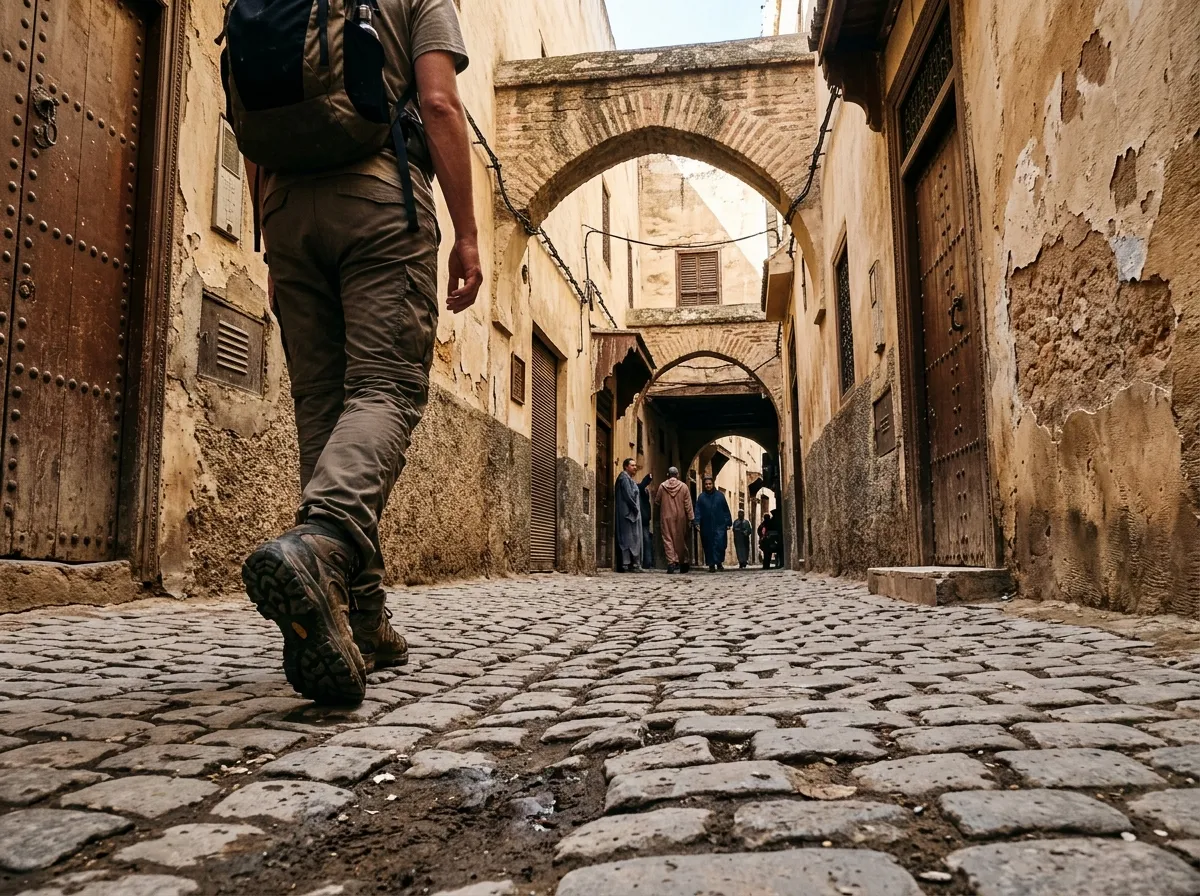
Vibram-Soled Footwear
The polished limestone and downhill cobblestones of Talaa Kebira and Talaa Seghira become slick from pedestrian traffic and morning wash-downs. Leave smooth dress shoes in your luggage and wear broken-in sneakers or trail shoes with reliable traction.
Breathable Modest Layers
As Morocco's spiritual heart, Fes appreciates respectful clothing choices. Pack lightweight linen trousers, long skirts, and shirts that cover the shoulders and knees. A breathable scarf protects against sun and wind while providing practical coverage for sacred stops.
High-Capacity Power Bank
Dense masonry and stone arches cause smartphones to expend extra power searching for cellular and GPS signals. Carry an external 10,000 mAh battery to ensure your offline navigation runs reliably throughout the day. Review our complete Morocco packing and essentials checklist.
Frequently Asked Questions: Fes Travel Guide
How many days are ideal for visiting Fes?
Two full days allow you to explore the major historical sights within Fes el-Bali (Bou Inania, Nejjarine, Chouara Tanneries, and the Mellah) at an easy pace. Adding a third day provides time for a medina cooking masterclass or a scenic day trip to the Roman ruins of Volubilis and imperial Meknes, as highlighted throughout this Fes travel guide.
Is Fes safe for solo female travelers?
Fes is generally safe, and violent crime is rare. However, solo travelers may encounter persistent verbal interactions, unsolicited directions, or shop invitations. Dressing modestly, walking with clear direction, keeping offline maps handy, and staying in riads near accessible gates (such as Batha or Bab Rcif) will help ensure a relaxed and confident visit. Read our first-time in Morocco guide for detailed safety tips.
What is the best time of year to visit Fes?
Spring (March through May) and Autumn (September through November) offer pleasant daytime temperatures averaging 20°C to 26°C (68°F–79°F). Summer months (July and August) can exceed 40°C (104°F) in the enclosed medina valley, while winter nights (December to February) can be brisk, often dropping to 5°C (41°F). Verify your chosen riad features heating before booking winter stays.
Can non-Muslims enter mosques in Fes?
Active mosques, including the main prayer hall of Al Quaraouiyine and the Moulay Idriss II Shrine, are reserved for Muslim prayer. However, non-Muslim visitors are welcome inside historical madrasas (Bou Inania and Al-Attarine) during visiting hours, which showcase the same classic Marinid tilework, carved stucco, and cedar craftsmanship.
Morocco Travel Advice
Connect with fellow travelers, share recent recommendations, and get vetted insights for your Morocco trip.
Join the Facebook GroupWhatsApp Concierge
Ask our local team a planning question about your Fes trip. Average response time under 25 minutes.
Message us on WhatsApp