An authentic Moroccan riad cooking masterclass is an intimate culinary bridge between vibrant residential souks and private domestic hearths. Unlike commercial cooking academies or scripted bus-tour demonstrations, a genuine workshop unfolds inside a family-owned courtyard alongside an experienced residential cook (dada).
Over four uninterrupted morning hours, you navigate neighborhood produce stalls, select seasonal ingredients, master foundational spice pairings, assemble slow-simmered earthen tagines, and dine together on a tranquil courtyard terrace.
Field Logistics at a Glance
Verified BenchmarkWhether planning your days across the vibrant alleys of the Marrakech Medina or the medieval car-free lanes of Fes el-Bali, selecting the right workshop model determines whether you gain genuine culinary insight or an overpriced tourist souvenir. Featured as a core pillar of our comprehensive Morocco activities directory, this field guide breaks down real market prices, dish mechanics, and local booking protocols.
Authentic Riad vs. commercial cooking schools.
Before booking, understand how intimate family-run kitchens, luxury hotel academies, and non-profit culinary workshops differ in group dynamics, equipment, and cultural depth.
| Feature | Family-Run Riad | Hotel Culinary Academy | Non-Profit Social Hub |
|---|---|---|---|
| Atmosphere | Intimate & Domestic: Private residential courtyard and family kitchen. | Polished Commercial: Demonstrations with video screens and prep counters. | Community Focused: Vocational training facility or social enterprise garden. |
| Group Size | 2 to 6 guests (strict cap ensures genuine workspace). | 10 to 20+ guests (classroom workstations). | 6 to 12 guests (social group setting). |
| Instructor | Traditional family cook (dada), assisted by bilingual hosts. | Professional executive chef with culinary assistants. | Vocational culinary trainees and non-profit instructors. |
| Souk Tour | Included Guided run to neighborhood food stalls and communal bakeries. | Omitted Ingredients are pre-weighed or sourced from an on-site garden. | Varies Often focuses on garden harvesting or on-site vegetable prep. |
| Equipment | Traditional clay tagines, heat diffusers, and domestic braziers. | High-end gas burners, stainless counters, and chef knives. | Standard home-grade cooktops and communal tables. |
| Typical Price | 450 to 650 MAD (~$45–$65 USD) | 650 to 1,200+ MAD (~$65–$120+ USD) | 350 to 450 MAD (~$35–$45 USD) |
| Best Suited For | Travelers seeking authentic cultural connection, medina exploration, and domestic cooking tips. | Travelers prioritizing modern culinary technique and air-conditioned convenience. | Travelers seeking ethical community impact and casual home-style recipes. |
The Wayfinder Perspective
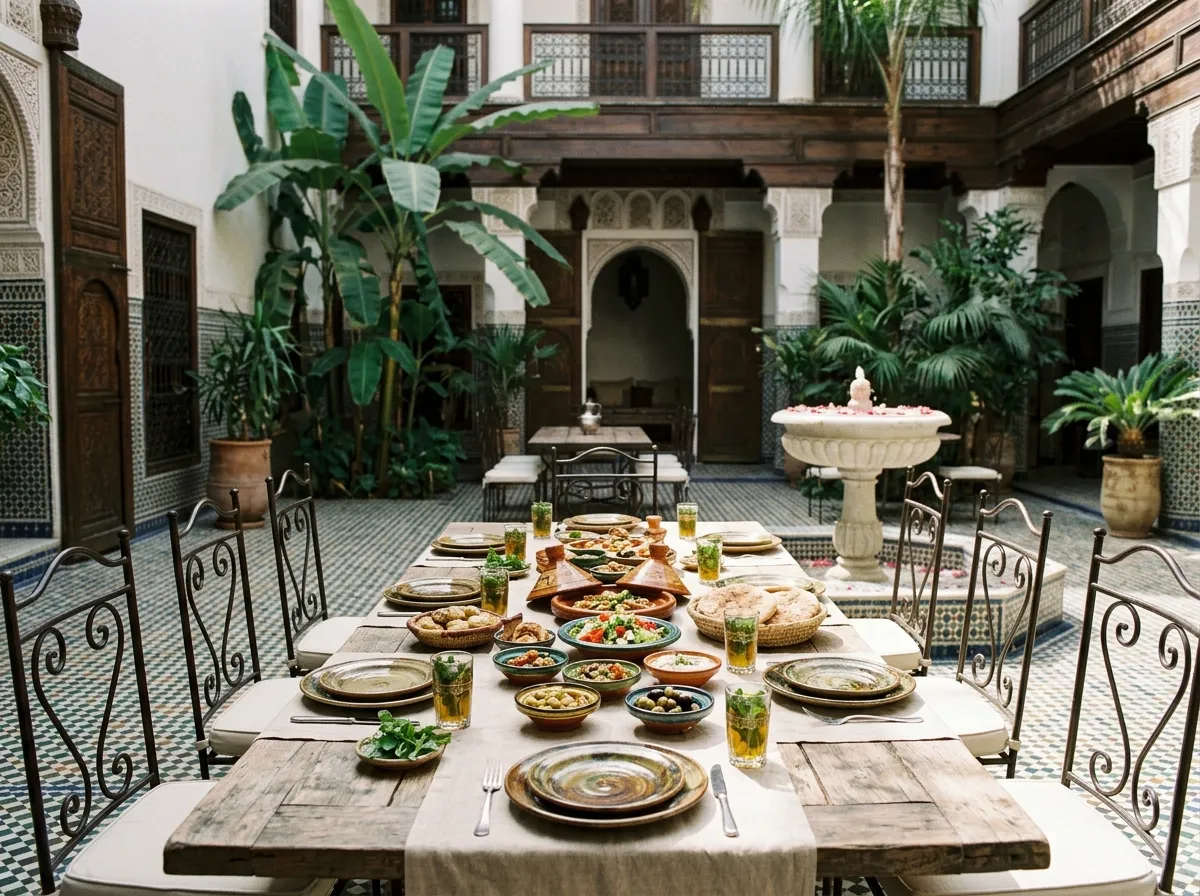
If your goal is to discover how everyday families prepare food behind medina walls, small workshops inside traditional Moroccan riads provide an unmatched atmosphere. Cooking inside a residential home lets you work alongside experienced home cooks, take dough to the neighborhood wood-fired oven (*ferran*), and share lunch beside a tranquil fountain courtyard far from commercial tourist hubs.
The 4-Hour Morning Timeline from medina market stalls to courtyard feast.
A well-structured riad masterclass balances street-level ingredient hunting with unhurried kitchen instruction. Starting at 9:30 AM gets you to neighborhood greengrocers just as daily valley produce arrives, finishing right before midday medina heat sets in.

The Medina Souk Ingredient Run
Meet your chef and host at the riad gates to venture into the residential medina quarters. Bypassing tourist stalls, you visit local greengrocers (souk el khodra) to hand-select seasonal vegetables, crisp spearmint, and flat-leaf coriander. You will stop at a neighborhood pickle vendor to sample salt-cured lemons (l’hamad mrakad) drawn straight from brine casks, alongside cured green olives.
Courtyard Arrival, Mint Tea & The Spice Matrix
Return to the quiet riad patio for a ritual hand-washing ceremony with warm water poured from a brass kettle (aftas). Over freshly brewed spearmint tea (atay bi naanaa), the chef introduces the primary spice palette: cumin, sweet paprika, turmeric, ground ginger, white pepper, and the house Ras el Hanout. You will learn the correct aromatic order and how heat impacts delicate spices.
Tagine Assembly & Communal Bread Kneading
Take your individual prep counter equipped with an authentic clay tagine. You build the aromatic base with grated onions, crushed garlic, and olive oil before layering seasonal meats and root vegetables conical-style to ensure balanced steam convection. Concurrently, you knead semolina flatbread (khobz). Depending on the riad’s location, dough rounds are stamped and sent to the local neighborhood communal oven (ferran) to bake over wood embers.
Fire-Roasted Zaalouk & Taktouka Compote
While your tagines gently simmer on low-flame heat diffusers, focus on Morocco’s classic cooked salads. Char whole bell peppers directly over flames to peel and dice for sweet-savory taktouka, then crush tender eggplant with cumin, garlic, and simmered tomatoes to create rich zaalouk. These versatile dishes illustrate home-style spice balance without heavy sauces.
Courtyard Terrace Feast & Recipe Takeaway
Take your seat around the courtyard fountain or on the panoramic rooftop terrace. The conical lids are lifted at the table, revealing piping-hot tagines with thick, reduced pan juices. Enjoy your meal with hot khobz fresh from the wood oven and the salad trio. The session concludes with mint tea, orange blossom pastries, and printed or digital recipe reference guides.
The Souk Walk genuine food market run vs. staged spice hustle.
The 45-minute ingredient run preceding your kitchen session can be the most rewarding cultural window of the morning—provided you visit working neighborhood food markets rather than commissioned tourist storefronts.

What an Authentic Market Run Looks Like
Your chef leads you directly into the residential souk el khodra (vegetable market) where local families purchase daily staples:
- Seasonal greengrocers: Vegetables are stacked in rustic plastic crates, sold by the kilo at standard local rates (typically 5 to 10 MAD per kg for carrots, onions, and zucchini).
- Fresh herb bunches: Spearmint (naanaa) and flat-leaf coriander (kosbor) are bought fresh every morning for 1 to 2 MAD per generous bunch.
- Barrel-cured olives: At open-air pickle stalls, you sample cured purple olives (meslalla) with wild thyme and preserved lemons (l’hamad mrakad) scooped straight from brine casks.
- Working grocery stalls: Spices are weighed to order on counter scales from burlap bags or glass jars and handed over in simple brown paper packets.
Red Flag: The Commissioned Spice Hustle
If your tour bypasses fresh vegetable stalls and escorts you into a multi-story tourist apothecary with scripted seating, your guide is likely collecting a 30% to 50% commission:
- Medical cure pitches: High-pressure monologues claiming herbs cure snoring, diabetes, or hair loss, turning a culinary run into a sales pitch.
- Massively inflated prices: Charging 80 to 150 MAD for 100g of ordinary cumin or paprika that costs 10 to 15 MAD in neighborhood grocery shops.
- Decorative spice cones: Highly manicured, colorful spice pyramids displayed along tourist corridors are visual set pieces exposed to street dust and vehicle exhaust.
- Uncertified argan oil: High-pressure pitches for “miracle cosmetic argan” at 300+ MAD without certified cooperative traceability.
Medina Etiquette & Street Navigation Protocols
Essential habits for respectful, hassle-free market interaction.
Carry Small Cash
Greengrocers and herb stalls deal in small change. Never attempt to pay for a 2 MAD bundle of mint with a 100 or 200 MAD bill. Keep 5, 10, and 20 MAD coins and small banknotes in an accessible pocket.
Ask Before Photographing
Medina vendors are working professionals, not decorative exhibits. Always make eye contact and request permission with a warm smile: “Momkin soura, afak?” (May I take a photo, please?).
Listen for “Balak!”
Narrow medina alleys are shared with loaded handcarts and motorbikes. When you hear shouts of “Balak! Balak!” (Make way!), step smoothly to the right-hand wall and allow traffic to pass.
The Kitchen Workshop core techniques, tagine thermodynamics & spice chemistry.
Real Moroccan cooking relies on heat management, aromatic balance, and patience rather than complex equipment. At an authentic riad workstation, you prepare your own dishes from scratch alongside a family chef (dada), mastering the hands-on techniques of residential medina cooking.
Tagine Thermodynamics
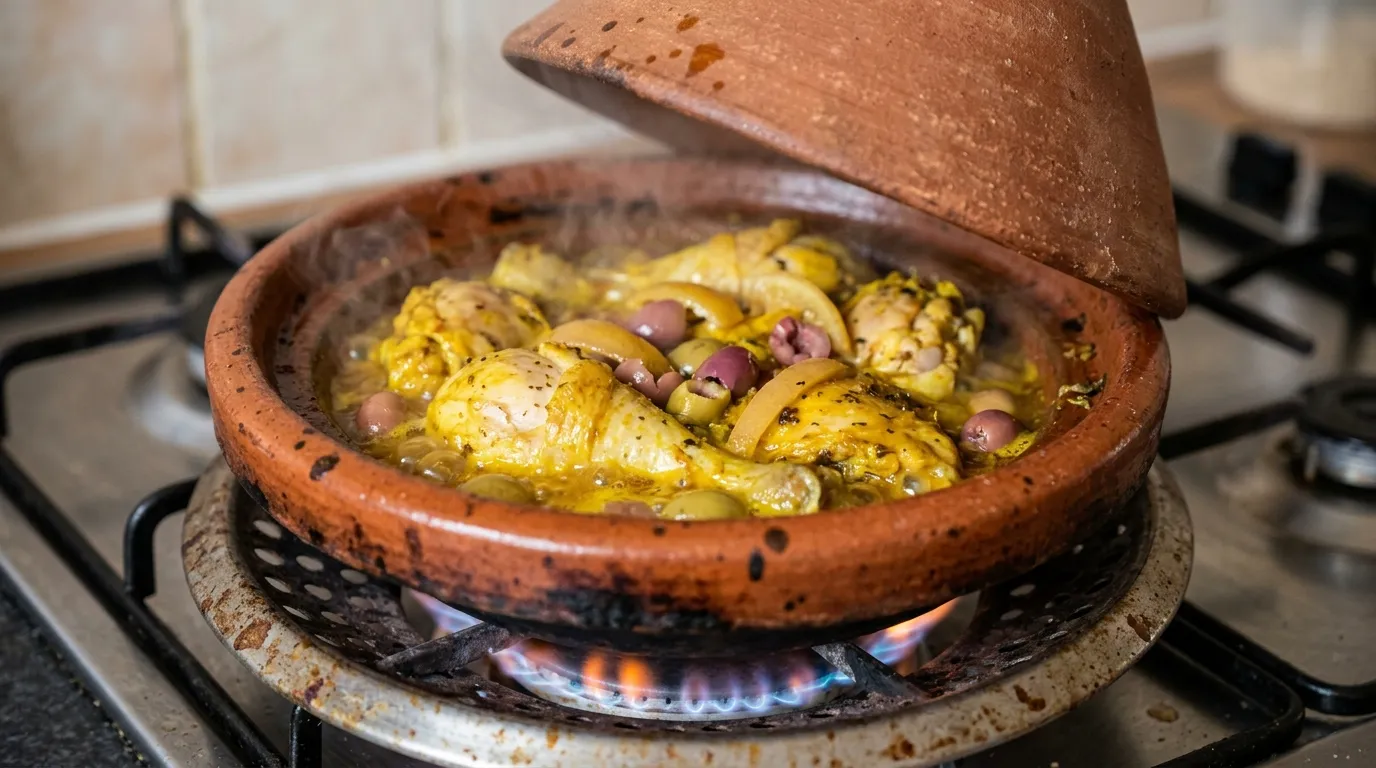
An authentic unglazed clay tagine (slaoui) is a natural convection chamber. The thick circular base retains steady heat, while the conical lid stays cooler toward its peak. Steam rising from the simmering ingredients condenses along the sloped cone and drips back down, basting the food continuously. This closed cycle yields tender meat with minimal added water, creating the thick, caramelized pan reduction known as daghmira.
The Seven-Spice Matrix
Moroccan cuisine prioritizes aromatic depth over fiery heat. You work directly with seven essential spices: warming ginger (skenjbir), golden turmeric (kherkoum), sweet paprika (tahmira), fragrant cumin (kamoun), delicate cinnamon (karfa), white pepper (ibzar byad), and house Ras el Hanout. You learn when to add delicate spices to protect them from high heat and bitter scorching.
Preserved Lemon Anatomy
Salt-cured for three months, preserved lemons (l’hamad mrakad) lose their raw bitterness and develop deep, savory umami notes. In class, you master the classic culinary division: the salty pulp is mashed directly into the garlic and herb marinade (chermoula) to tenderize proteins, while the tender peel is sliced into strips and laid on top during the final 15 minutes of cooking.
Semolina Flatbread (Khobz)
In Moroccan dining, flatbread serves as your primary utensil. You knead fine durum semolina (smida) and whole wheat flour using the base of the palm until the dough becomes elastic. After shaping into rounds, you dock the surface with a fork to control air pockets before the loaves are sent to bake over wood embers in the neighborhood communal oven (ferran).
Signature Dishes Prepared in Class
Small-group workshops allow participants or couples to select and prepare their primary dish.
Chicken with Preserved Lemon & Olives
Tagine Djaj m’ChermelFree-range chicken marinated in fresh coriander, garlic, ginger, and turmeric. Slow-braised with sliced onions and preserved lemon pulp, then topped with cracked purple meslalla olives.
Braised Beef or Lamb with Sweet Prunes
Tagine el Ghemmi bel BerqouqTender meat braised with saffron, cinnamon, and grated onions. Finished with soft prunes poached in honey and orange blossom water, toasted almonds, and sesame seeds.
Atlas Seven-Vegetable Berber Tagine
Tagine el KhodraCarrots, potatoes, zucchini, turnips, and seasonal squash arranged in a tight conical pyramid over onions and tomatoes. Seasoned with a light cumin-coriander broth.
Dietary Adaptations plant-based ease, celiac realities & cross-contamination.
Moroccan cuisine is naturally welcoming to plant-focused eaters, but requires precise protocols for severe gluten sensitivities and tree nut allergies. In an intimate riad workshop, adapting recipes is straightforward when dietary restrictions are flagged before the morning market walk.

Vegetarian & Vegan Travelers
Moroccan vegetable cookery is naturally vegan. The entire cooked salad mezze—including roasted eggplant zaalouk, sweet pepper taktouka, and cumin-marinated carrots—is simmered exclusively in cold-pressed extra virgin olive oil (zayt zaytoun).
Celiac & Gluten Sensitivities
Traditional tagine sauces, spice blends, and vegetable salads contain no wheat flour or hidden thickeners. The challenge lies entirely in table habits and bread prep:
- Individual serving tagines: Moroccans scoop food communally using crusty flatbread. Request an individual tagine so other participants do not dip wheat bread into your dish.
- Skip bread kneading: Sit out the Stage 03 semolina dough session to avoid airborne flour, and enjoy your finished meal with a fork.
- Couscous warning: Classic couscous is made from durum wheat semolina and is not gluten-free.
Nut & Seed Allergies
Blanched almonds and toasted sesame seeds are classic garnishes for festive sweet-and-savory dishes, especially beef with prunes (tagine bel berqouq) and sweet pigeon pies (pastilla).
Dairy & Lactose Intolerance
Authentic medina tagines, salads, and marinades rely on olive oil rather than butter, cream, or milk. Cheese is rarely used in home-style cooking.
Medina Communication Script (Darija & French)
Share these clear phrases with your riad host 24 to 48 hours prior to your morning run.
Cost Benchmarks & Booking Channels fair market rates, hidden expenses & direct reservation tips.
Culinary workshop rates in Marrakech and Fes fluctuate based on middleman commissions and group size. Understanding realistic dirham baselines protects your travel budget while ensuring fair compensation for experienced home cooks (dadas).
Social Enterprise Hubs
Conducted in vocational culinary facilities supporting women’s economic independence. Generous portions and relaxed instruction.
- Capacity: 6 to 12 participants
- Souk Walk: Omitted or garden-based
- Atmosphere: Casual training center
- Best For: Budget travelers & social impact
Authentic Family Riad
The ideal standard for cultural depth. Intimate domestic riad courtyard setting featuring a full morning produce run with the family cook.
- Capacity: 2 to 6 participants (strictly capped)
- Souk Walk: 45-minute neighborhood market run
- Atmosphere: Domestic courtyard & terrace
- Best For: Couples, food lovers & culture seekers
Hotel Culinary Academy
Structured classroom academies in boutique hotel properties or private 1-on-1 sessions with commercial chef stations.
- Capacity: 10 to 20+ (or private buyout)
- Souk Walk: Usually omitted for pre-portioned prep
- Atmosphere: Commercial air-conditioned kitchen
- Best For: Large groups & technique-first cooks
Field Ledger: What Your Workshop Fee Covers
Review standard inclusions and customary extra expenses before booking.
Workshop Deliverables
- Guided market walking tour with chef (neighborhood produce and herbs)
- All raw food staples, spices, meats, vegetables, and cooking oils
- Individual workstation setup with clay tagine and prep implements
- Semolina bread dough making and local wood-fired oven fees
- Full multi-course courtyard lunch enjoying your prepared dishes
- Fresh mint tea ceremonies and bottled drinking water throughout
- Printed or downloadable digital recipe breakdown to recreate meals
Discretionary Expenses
- Alcoholic drinks (residential riads do not hold liquor licenses; ask ahead to bring wine)
- Door-to-door transportation to the medina gates (neighborhood walk required)
- Souk purchases outside of class recipe items (e.g., personal argan oil or saffron)
- Staff gratuities (tipping 50 to 100 MAD total per party is customary for kitchen staff)
Need Help Choosing a Vetted Medina Workshop?
Skip
Most travelers visit both Marrakech and Fes, leading to a natural question: where should you dedicate your 4-hour morning masterclass? While both medinas preserve exceptional domestic cooking, their flavor profiles, market energy, and architectural settings differ significantly.
Marrakech serves as the culinary gateway to the High Atlas and southern desert valleys. Its cooking leans into robust, earthy aromatics: heavy cumin, sweet paprika (tahmira), garlic, and preserved citrus.
Recognized as Morocco’s gastronomic capital, Fes preserves an aristocratic Arab-Andalusian heritage defined by sweet-and-savory complexity (hlou w maleh), saffron, and orange blossom water. A 4-hour morning cooking session requires dedicated breathing room.
Compare neighborhood nuances across both imperial cities in our regional Moroccan destination guides, or see how to integrate this culinary morning smoothly into our vetted 7-day and 10-day Morocco itineraries.
While an authentic riad cooking masterclass is frequently a highlight of a Moroccan journey, mass-market tours sold through medina kiosks often disappoint. Recognizing these four operational pitfalls ensures you spend your morning learning genuine culinary technique rather than scripted tourist theater.
The Pitfall: Low-cost classes sold at generic street kiosks often pack 15 to 25 tourists into a commercial classroom. Participants sit on benches watching an instructor cook under a demonstration mirror, chopping a single clove of garlic without individual tactile involvement.
Always confirm workstation ratios in writing before booking. An authentic masterclass strictly caps capacity at 4 to 6 participants, providing a dedicated clay tagine and prep surface for every guest or couple.
The Pitfall: The promised “souk tour” spends 5 rushed minutes buying an onion, followed by 45 captive minutes in a multi-story tourist herbalist shop. High-pressure salespeople push overpriced saffron and cosmetic oils while guides collect a 30% to 50% commission.
Confirm the itinerary beforehand. Authentic runs visit working greengrocers (souk el khodra) and spice hanouts. If routed to an herbalist showroom, politely state you are there only to source food and ask to return to the kitchen.
The Pitfall: Booking an afternoon session (starting at 2:30 PM or 3:00 PM) to sleep in. By 2:00 PM, market stalls have sold their fresh morning produce, leaving limp herbs. Tending simmering charcoal tagines in a courtyard during afternoon heat is exhausting.
Always reserve the 9:30 AM morning departure. Morning market runs align with daily valley produce shipments, take advantage of cooler shaded alleys, and finish with lunch right at peak appetite (1:30 PM).
The Pitfall: Expecting wine or cold beer to be served in a residential riad. Traditional homes in historic medinas rarely hold commercial alcohol licenses. Demanding alcohol upon arrival creates uncomfortable cultural friction.
Ask about bring-your-own (BYO) policies 24 hours in advance. Most riads will gladly provide glassware and an ice bucket if you purchase Moroccan Gris or Rouge from a licensed new town supermarket beforehand.
Before finalizing your morning cooking reservation, review these verified answers to common questions regarding attire, children, tipping protocols, and holiday hours. If you need personalized guidance, connect directly with our local travel network.
Wear comfortable, closed-toe walking shoes with non-slip soles for the 45-minute medina market walk, as historic cobblestones can be uneven and occasionally damp around greengrocer stalls. Choose breathable, relaxed cotton or linen layers that keep you cool near simmering braziers.
Avoid wearing expensive white garments or delicate silks; ground turmeric (kherkoum) and sweet paprika (tahmira) produce vivid natural dyes that stain fabrics permanently upon contact. Aprons are typically provided by the riad upon your return from the market.
Most family-run riads welcome children aged 7 and older for shared workshops, particularly for hands-on tasks like kneading semolina flatbread dough (khobz) and arranging vegetable pyramids in tagines.
For families with younger children or toddlers (under age 7), booking a private session is strongly recommended. Commercial knives, open charcoal braziers (kanoun), and scalding earthenware lids present genuine safety hazards in compact residential kitchens.
Reputable masterclasses supply either a printed recipe booklet at the conclusion of lunch or email a digital PDF packet detailing ingredient weights, spice ratios, and cooking times.
Measurements in Morocco are calculated in metric grams and milliliters; quality guides include both metric and imperial volume conversions (cups and tablespoons) along with local Arabic terminology so you can source authentic ingredients when shopping at home.
Tipping is a customary and appreciated gesture of hospitality in Morocco. While class fees cover ingredient costs and tuition, leaving a cash gratuity of 50 to 100 MAD total per traveling party (delivered directly to the family cook or placed in the staff gratuity box) is standard etiquette.
Gratuities should always be provided in cash using Moroccan Dirhams (MAD).
During the holy month of Ramadan, morning schedules undergo seasonal adjustments. Because local cooks fast from dawn until sunset, some riads shift class departures to late afternoon (typically 3:30 PM to 4:00 PM), allowing the workshop to conclude with an authentic sunset breakfast feast (Iftar or Ftour) alongside the host family.
Other riads maintain the 9:30 AM morning session, providing discrete courtyard dining or packing your prepared tagine in insulated takeaway containers for your evening meal. On Fridays year-round, workshops often launch 30 minutes earlier (9:00 AM) to accommodate midday congregational prayers.
Connect with fellow independent travelers, share real-time medina recommendations, and compare recent cooking class experiences across Marrakech and Fes.
Speak directly with our local desk to check verified riad availability, confirm non-profit cooking slots, or coordinate dietary requirements for your dates.
Choosing Your Setting
marrakech medina vs. fes el-bali culinary heritage.

Marrakech Medina
Bold Berber Traditions & Rooftop TerracesFes el-Bali
Aristocratic Fassi Refinement & Zellige CourtyardsWhere to Place Your Masterclass on the Map
Common Pitfalls & Tourist Traps
how to bypass scripted sales pitches, giant group demos & scheduling errors.
The 20-Person “Auditorium Demo”
The Staged “Apothecary Hostage” Tour
The Afternoon Heat & Wilted Produce Blunder
The Unlicensed Alcohol Misunderstanding
Field Logistics FAQs & Concierge
essential answers, on-the-ground etiquette & route support.
What should I wear to a morning riad cooking class?
Are children and teenagers allowed to participate in authentic classes?
Do workshops provide written recipes to recreate dishes at home?
How much should I tip the chef and riad kitchen assistants?
How do workshops operate during Ramadan or on religious holidays?
Morocco Travel Advice
WhatsApp Concierge Desk