
Morocco Packing List & What to Wear: Essential Modest Clothing and Travel Gear
Packing for Morocco requires balancing breathable, modest layers for historic medinas with practical gear for shifting microclimates. Within a single itinerary, you can move from breezy Atlantic coastal towns and sun-drenched interior plains to chilly nights in the High Atlas Mountains and Sahara Desert—often while walking through car-free, cobblestone alleyways where your choice of luggage and footwear matters every day.
Whether you are building a versatile seasonal wardrobe, assembling a traditional bathhouse (hammam) kit under the Two-Pair Rule, or checking Moroccan customs rules before departure, confirm specific dress policies and heating or cooling amenities directly with your accommodations and activity providers.
Morocco Packing Logistics at a Glance
Skip to Master Packing ChecklistRecommended in traditional medinas, souks, and rural villages to show local respect; modern city districts and coastal resorts are more relaxed.
Historic medinas like Fes and Chefchaouen are pedestrian-only with uneven stones and steps; fragile 4-wheel spinner wheels jam easily.
European two-round-pin outlets are standard across Morocco. Check dual-voltage ratings (100V–240V) on hair tools before plugging in.
Airport and ferry port customs scanners routinely confiscate recreational drones brought in without prior Moroccan civil aviation permits.
Editorial Transparency: Morocco Wayfinder is reader-supported. If you purchase or book through an affiliate link on this page, we may earn a commission at no extra cost to you. Dress expectations, weather conditions, and customs enforcement can vary by location and season; verify current requirements with your venue or official authorities before travel.
Dress Code in Morocco: Cultural Expectations vs. Tourist Reality
Morocco has no legal dress code or morality police governing tourists, and major international hotels, coastal beach clubs, and modern urban districts are relaxed. However, dressing with local cultural norms in mind—particularly in traditional walled medinas, rural mountain villages, and religious settings—prevents unwanted attention and shows respect for local traditions.

Women’s Wardrobe Strategy: Balancing Modesty and Comfort
- Core Principle: Aim to cover shoulders, upper arms, and knees in traditional areas. Loose, flowing silhouettes keep you cooler in dry heat than tight garments.
- Fabrics & Layers: Breathable linen, cotton, and chambray trousers or maxi skirts. A lightweight scarf or pashmina is invaluable for sun protection, dusty winds, or entering sacred spaces.
- Footwear & Bags: Supportive walking shoes for uneven stones, plus a secure, zipped cross-body bag worn in front while navigating crowded souk alleys.
Men’s Wardrobe Strategy: Practicality and Local Respect
- Core Principle: While local men wear modern European-style clothing (jeans, t-shirts, shirts), wearing shorts in traditional medinas or rural towns marks you immediately as a tourist.
- Fabrics & Layers: Lightweight chinos, linen trousers, and collared or short-sleeve shirts offer a polished, respectful appearance in cafes and restaurants.
- Footwear & Comfort: Closed-toe sneakers or casual leather shoes protect feet from dust and uneven cobblestones better than flimsy sandals.
Environment Wardrobe Matrix: What to Wear Where
Scroll horizontally on mobile screens →| Environment | Recommended Women’s Attire | Recommended Men’s Attire | Local Context & Etiquette |
|---|---|---|---|
| Traditional Medinas (Fes, Marrakech, Chefchaouen) | Loose trousers, maxi skirts, tunics covering shoulders and knees; lightweight scarf handy. | Lightweight chinos or trousers, collared shirts or neat t-shirts (avoid gym shorts). | Pedestrian souks are conservative communities; modest clothing minimizes stares and hawker friction. |
| High Atlas & Rural Villages | Conservative layering; ankle-length trousers, high-neck t-shirts, sturdy hiking boots. | Durable trousers, layered fleeces or windbreakers, sturdy walking shoes. | Mountain and desert communities are deeply traditional; highly revealing clothing is considered deeply inappropriate. |
| Modern Districts (Casablanca, Gueliz) | Contemporary urban wear, jeans, dresses, skirts; standard European city style. | Jeans, smart trousers, t-shirts, button-downs, blazers. | Upscale cafes, business districts, and modern boulevards mirror European metropolitan standards. |
| Coastal Resorts (Agadir, Essaouira) | Beachwear, shorts, sundresses, swimwear with a cover-up when walking in town. | Shorts, t-shirts, casual resort wear, sandals. | Beach towns accustomed to international surfers and holidaymakers are casual and relaxed. |
What to Pack for Morocco by Season & Microclimate
Morocco is a land of dramatic temperature contrasts. Within a single week, you can experience intense desert sun, humid Atlantic breezes, and freezing mountain nights. Packing effectively means prioritizing modular layers rather than heavy single-purpose garments.
Spring & Autumn (Shoulder Seasons)
- Climate & Vibe: Ideal shoulder seasons with warm daytime temperatures (20°C–28°C) and comfortably cool evenings. Light rain showers are possible in northern regions.
- Packing Strategy: Pack breathable long-sleeve shirts, lightweight cardigans or fleece layers, comfortable walking trousers, and a wind-resistant jacket for breezy evenings.
Summer Heat (Plains & Coast)
- Climate & Vibe: Extreme dry heat across interior plains and desert zones (38°C–45°C), contrasted with refreshing, windy Atlantic conditions in Essaouira and Tangier (22°C–26°C).
- Packing Strategy: Prioritize loose, 100% linen or lightweight cotton clothing, a wide-brimmed sun hat, UV sunglasses, high-SPF sunscreen, and a windbreaker or hoodie for cool coastal nights.
Winter Cold (Atlas & Desert)
- Climate & Vibe: Mild, sunny daytime weather in Marrakech and coastal cities (15°C–20°C), but near-freezing night temperatures (0°C–6°C) in the High Atlas Mountains and Sahara Desert.
- Packing Strategy: Essential winter layering: a packable down jacket, thermal base layers, wool socks, a warm beanie, gloves, and sturdy closed footwear.
The Unheated Riad Reality
- Architectural Note: Traditional Moroccan riads are masonry-and-tile structures engineered to stay cool during brutal summer heatwaves. They typically lack central heating.
- Packing Strategy: Between November and March, traditional riads become surprisingly cold at night. Pack warm fleece pajamas, thick wool sleep socks, and indoor slippers to stay comfortable while relaxing in courtyard lounges.
Activity-Specific Gear: Hammams, Sahara Desert & Medina Walking
Certain Moroccan experiences demand specialized preparation. Whether you are stepping into a traditional neighborhood bathhouse, riding a camel across Saharan dunes, or navigating centuries-old medina stone staircases, having the right gear prevents discomfort and ensures cultural respect.
The Hammam Kit & “Two-Pair Rule”
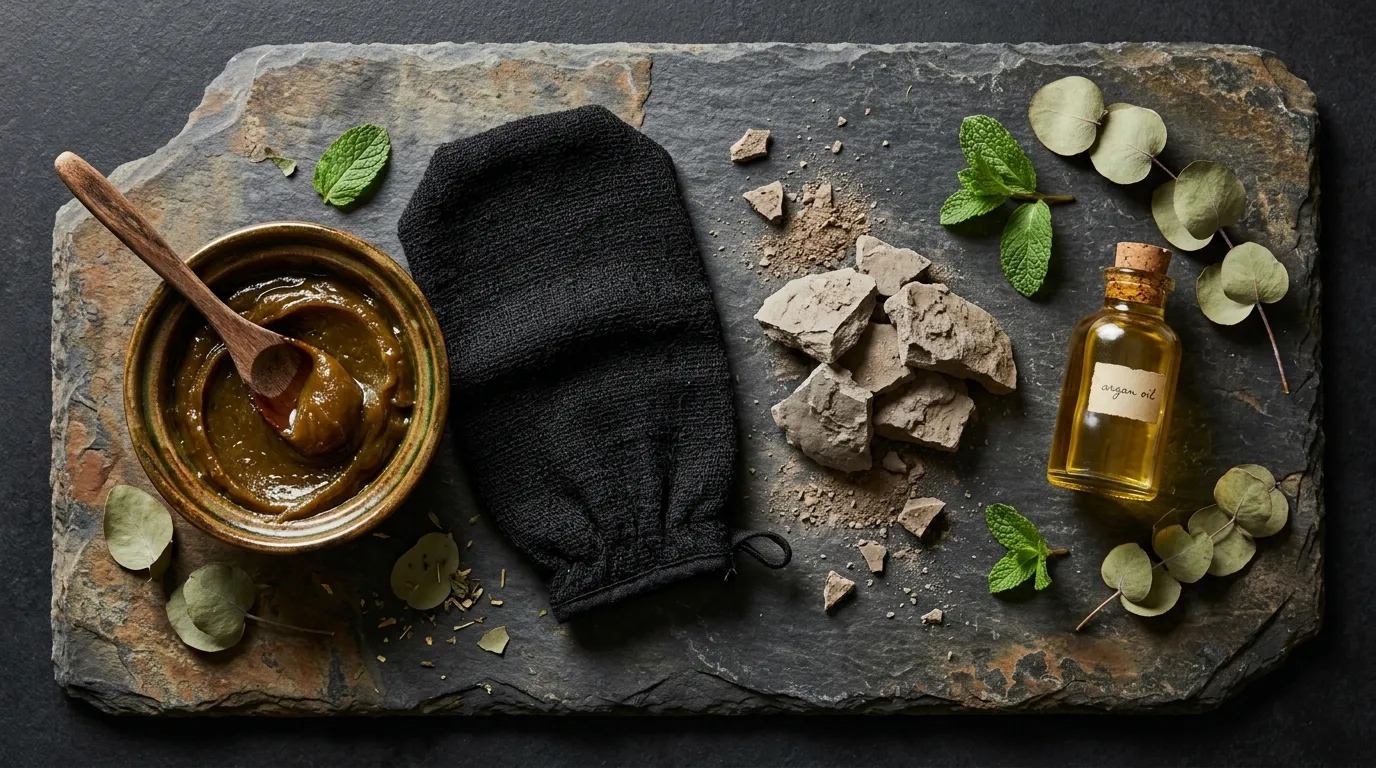
- Cultural Context: Complete public nudity is culturally offensive in Moroccan bathhouses. Bathers must keep underwear or swim bottoms on at all times.
- The Two-Pair Rule: Pack two pairs of dark, opaque undergarments or swim bottoms—one wet pair for the soapy kessa scrub, and a fresh, dry pair to put on in the locker room before leaving.
- DIY Kit Essentials: Rubber slide sandals (mandatory for slippery, soapy tiles), two quick-dry fouta towels, a waterproof wet-bag, and locally sourced savon noir and kessa mitt.
Sahara Desert & Camel Trekking

- Saddle Comfort: Wear long, loose trousers (never shorts) to prevent abrasive camel-hair friction against bare skin during long treks.
- Sun & Wind Protection: Bring a cotton cheich (traditional headscarf) to protect your face from blowing desert sand, UV sunglasses, and lip balm with SPF.
- Nighttime Layers: Desert temperatures plummet after sunset; pack a packable down jacket or fleece, a beanie, and thermal socks.
Medina Cobblestones & Hiking

- Footwear Strategy: Avoid slick-soled fashion sandals or high heels. Opt for cushioned walking shoes or trail sneakers with aggressive rubber tread to handle polished limestone steps.
- Daypack Safety: Wear a zippered cross-body daypack worn securely in front of you while navigating crowded, bustling souk alleys.
Complete Morocco Packing Checklist: Luggage, Tech, Pharmacy & Documents
Use this master checklist to organize your bags before departure. Every item has been curated specifically for Morocco’s climate variations, pedestrian medina logistics, and cultural norms.

Clothing & Footwear Capsule
- Breathable Tops: 5 to 7 lightweight, loose-fitting shirts or tunics covering shoulders.
- Trousers & Skirts: 2 to 3 pairs of breathable linen/cotton trousers or maxi skirts.
- Outer Layers: 1 warm fleece or packable down jacket + 1 lightweight wind/rain shell.
- Footwear: 2 pairs of broken-in walking shoes/sneakers + 1 pair of rubber slide sandals.
- Underwear & Sleep: 7 pairs of underwear (including 2 dark opaque hammam pairs) + modest sleepwear.
Tech, Power & Connectivity
- Power Adapters: European Type C & Type E two-round-pin plug adapters (220V).
- Power Bank: 10,000mAh+ portable charger for long train and desert transit days.
- Connectivity: Pre-activated Morocco eSIM for immediate data upon arrival.
- Navigation & Capture: Smartphone with offline maps downloaded + camera gear.
Pharmacy, Sun & Hygiene
- Sun Protection: High-SPF broad-spectrum facial sunscreen and UV sunglasses.
- Digestive Kit: Loperamide, rehydration salt packets, and personal motion-sickness meds.
- First Aid: Blister plasters, antiseptic wipes, and standard pain relievers.
- Sanitation: Pocket tissues or toilet paper roll (for rural stops), hand sanitizer, and wet wipes.
Documents, Cash & Driving
- Passport & Visas: Valid passport (6+ months validity) + printed riad reservations.
- Cash Supply: Moroccan Dirham (MAD) cash pouch (small bills: 20, 50, 100 MAD).
- Cards: 2 credit/debit cards stored separately in anti-theft bags.
- Driving Docs: Physical driver’s license + International Driving Permit (if renting a car via car rental guide).
What to Buy Locally in Morocco vs. What to Pack from Home
Overpacking is one of the most common travel mistakes. Knowing what is readily available and inexpensive in Moroccan souks and pharmacies allows you to leave bulky items at home while ensuring you never arrive without vital personal supplies.

Sourcing Comparison Matrix: Buy Locally vs. Pack from Home
Scroll horizontally on mobile screens →| Category | Buy Locally in Morocco (Save Luggage Space) | Must Pack from Home (Bring Before Departure) | Strategic Rationale & Notes |
|---|---|---|---|
| Hammam & Spa Supplies | Traditional savon noir (olive soap), crepe kessa exfoliating mitts, Atlas ghassoul clay, and pure cosmetic argan oil. | High-end specialized facial serums or specific brand-name organic skincare lines. | Authentic bathhouse supplies are exceptionally cheap and abundant in local medina souks and cooperatives (30–80 MAD total). |
| Textiles & Cover-ups | Lightweight cotton fouta towels and woven desert headscarves (cheich). | Thick, heavy hotel bath sheets. | Foutas dry instantly in desert and coastal sun, take up minimal luggage space, and double as modesty shawls. |
| Pharmaceuticals | Standard European-standard remedies, antiseptic creams, motion-sickness pills, and basic pain relievers at local pharmacies (green crescent sign). | Specific prescription medications (in original labeled containers) and personal contact lens solutions. | Moroccan pharmacists are well-trained and stock reliable generics, but specific prescription brands may differ in name or availability. |
| Sun Care & Hygiene | Basic soaps, shampoos, and standard toiletries at local supermarchés (Carrefour/Marjane). | High-SPF facial sunscreen and tampons. | Imported European sunscreens carry steep import markups in Morocco (200–350+ MAD), and tampons are generally restricted to major city hypermarkets. |
What Not to Pack: Moroccan Customs Restrictions & Impractical Gear
Knowing what to leave behind is just as important as knowing what to pack. Avoiding prohibited electronic equipment and impractical luggage designs prevents stressful border delays and mobility issues on historic medina streets.
Fragile 4-Wheel Spinner Suitcases
- The Medina Reality: Historic medinas (such as Fes el-Bali and Chefchaouen) feature narrow stone alleyways, steps, and unpaved slopes where car drop-offs are impossible.
- Why to Avoid: Small 4-wheel plastic spinner wheels jam, crack, or shear off entirely when dragged over uneven cobblestones. Opt for a rugged 2-wheel roller or a travel backpack.
Stiff Synthetics & Heavy Denim
- Climate Conflict: Non-breathable synthetic fabrics trap body heat during hot daytime hours, while heavy denim jeans take days to dry in humid coastal air or unheated riads.
- Alternative: Stick to 100% linen, lightweight cotton, and moisture-wicking technical fabrics that breathe and dry quickly.
Flashy Jewelry & Open Totes
- Transit Security: Open-top tote bags and expensive, ostentatious jewelry invite unnecessary attention in crowded transport hubs and busy souks.
- Alternative: Use a zippered cross-body bag worn securely in front of your body, and leave high-value luxury jewelry at home.
Frequently Asked Questions About Dressing and Packing for Morocco
Preparing for a trip across North Africa naturally raises specific questions about wardrobe rules, local laundry facilities, and cultural boundaries. Below are direct answers to the most common packing inquiries.
Do female tourists need to wear a headscarf in Morocco?
No. Female travelers are not required to cover their heads in public streets, restaurants, or hotels. A lightweight scarf is highly recommended, however, for sun protection, dusty desert winds, or entering sacred sites where modesty is requested.
Can I wear shorts and tank tops in Marrakech or Agadir?
In modern tourist resort towns like Agadir, coastal beach clubs, and upscale hotel poolsides, shorts and tank tops are completely normal. When exploring historic walled medinas, traditional souks, or rural towns, opting for trousers or skirts below the knee and shoulders covered shows greater cultural respect.
Are laundry services easy to find in Moroccan riads and hotels?
Yes. Almost all traditional riads and boutique hotels offer wash-and-fold laundry services for a small fee. Because clothes dry under the warm Moroccan sun or on rooftop terraces, plan for a 24-hour turnaround and prioritize quick-drying fabrics during winter months.
What shoes should I pack for walking in the medina?
Pack well-broken-in sneakers or lightweight walking shoes with sturdy rubber soles. Historic medinas feature uneven limestone cobblestones, damp tile steps, and occasional inclines where smooth-soled fashion sandals or high heels are hazardous.
Can I wear a bikini or two-piece swimsuit in Morocco?
Yes at private hotel pools, riad rooftops, and international beach resorts like Agadir or Essaouira. On public local beaches or conservative family swimming spots, wearing a one-piece swimsuit or throwing a light cover-up over your swimwear when walking along the shore is more comfortable.
Do I need to bring a portable water filter bottle?
Tap water across major Moroccan cities is treated, but visitors with sensitive stomachs generally prefer drinking bottled mineral water (such as Sidi Ali or Ain Saiss), which is inexpensive and widely available everywhere. An insulated reusable bottle keeps water cold during long desert and mountain transits.
Join the Morocco Wayfinder Community & Travel Concierge
Preparing for your Moroccan journey shouldn’t involve guesswork. Whether you need real-time advice on seasonal weather shifts in the Atlas Mountains or want to verify private riad amenities before booking, our community and Casablanca travel desk are here to assist.
The Morocco Wayfinder Travel Community
Connect with independent travelers, expats, and Moroccan locals. Ask peer questions about current suitcase weight limits, train storage, and packing strategies.
- Unfiltered Peer Advice: Real traveler reports on weather, luggage, and packing lessons.
- Medina Navigation: Practical tips from recent visitors on arriving prepared.
- Community Support: Share your experiences and ask questions before departure.
Direct WhatsApp Travel Concierge
Traveling with specific medical requirements, planning a desert trek, or seeking vetted private riads? Chat directly with our Casablanca travel desk for tailored advice.
- Vetted Accommodations: Guidance on riads with verified heating or cooling.
- Custom Packing Guidance: Quick answers regarding seasonal wardrobe choices.
- Direct Assistance: On-the-ground support operated from our Casablanca desk.
Researched on the Ground from Casablanca
Morocco Wayfinder is an independent travel intelligence platform operated directly from our operational desk in Casablanca. We never accept sponsored product placements or undisclosed commissions that compromise our editorial integrity. Every checklist item and seasonal tip in this guide is verified against active field conditions. Learn more about our research methodology on our About Us page.