The Ultimate Rabat Travel Guide The Royal Capital 1–2 Days of Ocean Cliffs, History & Modernity Medina & Beyond
This Rabat Travel Guide helps you plan the Kasbah of the Udayas, the Bouregreg riverfront, Hassan Tower, Chellah, and the capital’s distinctive historic and modern districts.
Transport fares last checked: 6 November 2026. Tram single ticket: 7 MAD per the operator; taxi minimum: 7.50 MAD in the ESSEC Rabat transport guide. Taxi-trip examples change with route and meter tariff; verify the meter and current fare locally. See linked sources in the Rabat circuit map.
Rabat Travel Guide: Daily Cost & Transit Matrix
This rabat travel guide benchmarks real ground expenses across three travel styles, factoring in train connections, accommodation styles, and dining realities.
| Travel Tier | Daily Budget (MAD / USD) | Lodging Standard | Transit Style | Meals & Entry Fees |
|---|---|---|---|---|
| Eco / Independent | 350 – 550 MAD $35 – $55 USD | Budget Medina guesthouse or hostel dorm in Rabat Medina | Rabat–Salé Tramway (current single ticket 7 MAD) & walking | Street sandwiches, medina bakeries, self-guided monument tours |
| Mid-Range Explorer | 900 – 1,700 MAD $90 – $170 USD | Boutique restored riad in Kasbah or Quartier Hassan | Metered petit taxis & regional ONCF Atlas trains | Courtyard riad dinners, certified local site guides, museum tickets |
| Private & Luxury | 2,500 – 5,500+ MAD $250 – $550+ USD | 5-star historic luxury hotel (La Tour Hassan) or premium villa | Private chauffeurs & First-Class Al Boraq high-speed rail | Fine-dining Andalusian gastronomy, private maritime charters |
Rabat Travel Guide: 48-Hour Exploration Masterplan
Designed for independent travelers who value cultural depth over rushed checkboxes. Follow this Rabat Travel Guide sequence to group nearby sights, avoid midday heat, and navigate transit hubs with less backtracking.
Rabat Travel Guide: Satellite Map & 48-Hour Circuit
Use this Rabat Travel Guide map to explore the route by day. Numbered pins match the legend. Dashed lines show the suggested stop order only; they are indicative connectors, not measured walking routes or turn-by-turn navigation. Confirm ferry or tram service and suitable drop-offs locally.
Transit fares are date-sensitive. Sources: Rabat–Salé Tramway fares and validation rules; ESSEC Rabat transport guide for a dated taxi reference; official tram network map.
Kasbah of the Udayas & Ocean Cliff Bastion
- Location: Mouth of Bouregreg River
- Entry: Free (Gardens & Bastion)
- Pace: 2.5 hours • Walking
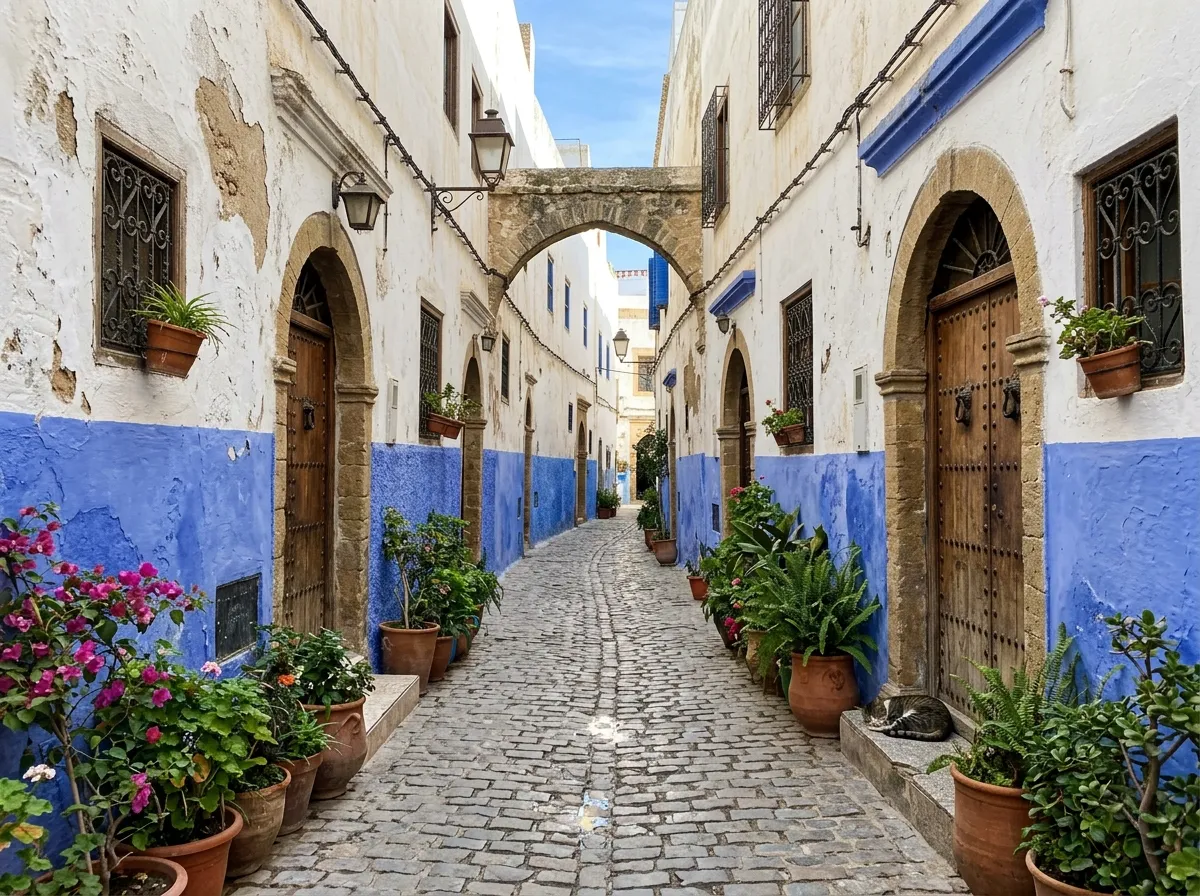
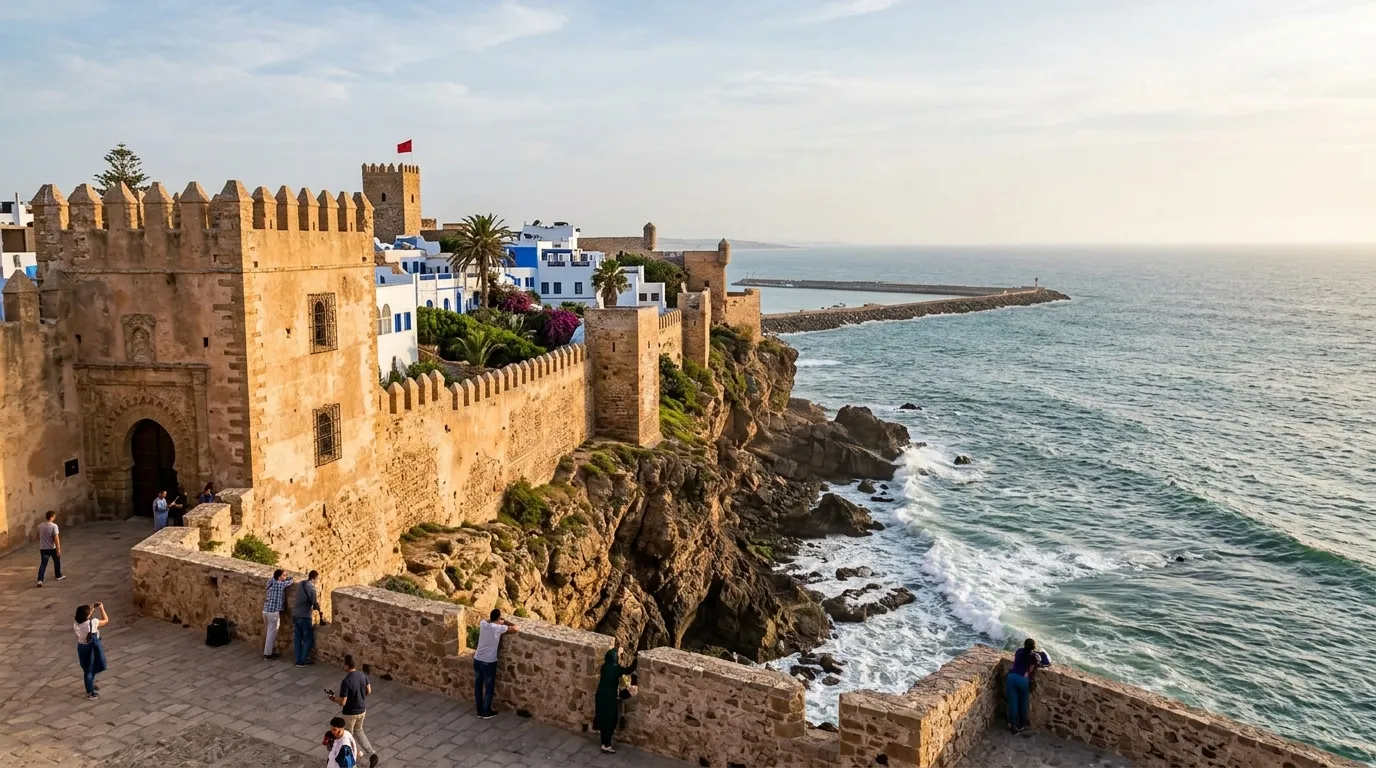
Begin your morning at the monumental 12th-century Bab Oudaia gate, constructed under the Almohad dynasty. Entering the fortress reveals a tranquil enclave of cobalt blue and chalk-white residential alleys, reminiscent of Chefchaouen but without the tourist congestion. This rabat travel guide recommends following Rue Bahi down to the Plateforme du Sémaphore, where stone fortifications open to panoramic vistas of the Atlantic surf crashing against the Bouregreg breakwater.
Descend through the shaded Andalusian Gardens, designed during the French Protectorate era, fragrant with orange blossoms and oleanders. Stop at the open-air Café Maure for sweet mint tea paired with almond-rich cornes de gazelle pastries while looking across the river towards the neighboring historic city of Salé.
Old Medina & Rue des Consuls Artisan Market
- Location: Medina Wall to Bab El Had
- Vibe: Authentic Local Commerce
- Pace: 2 hours • Shopping & Lunch
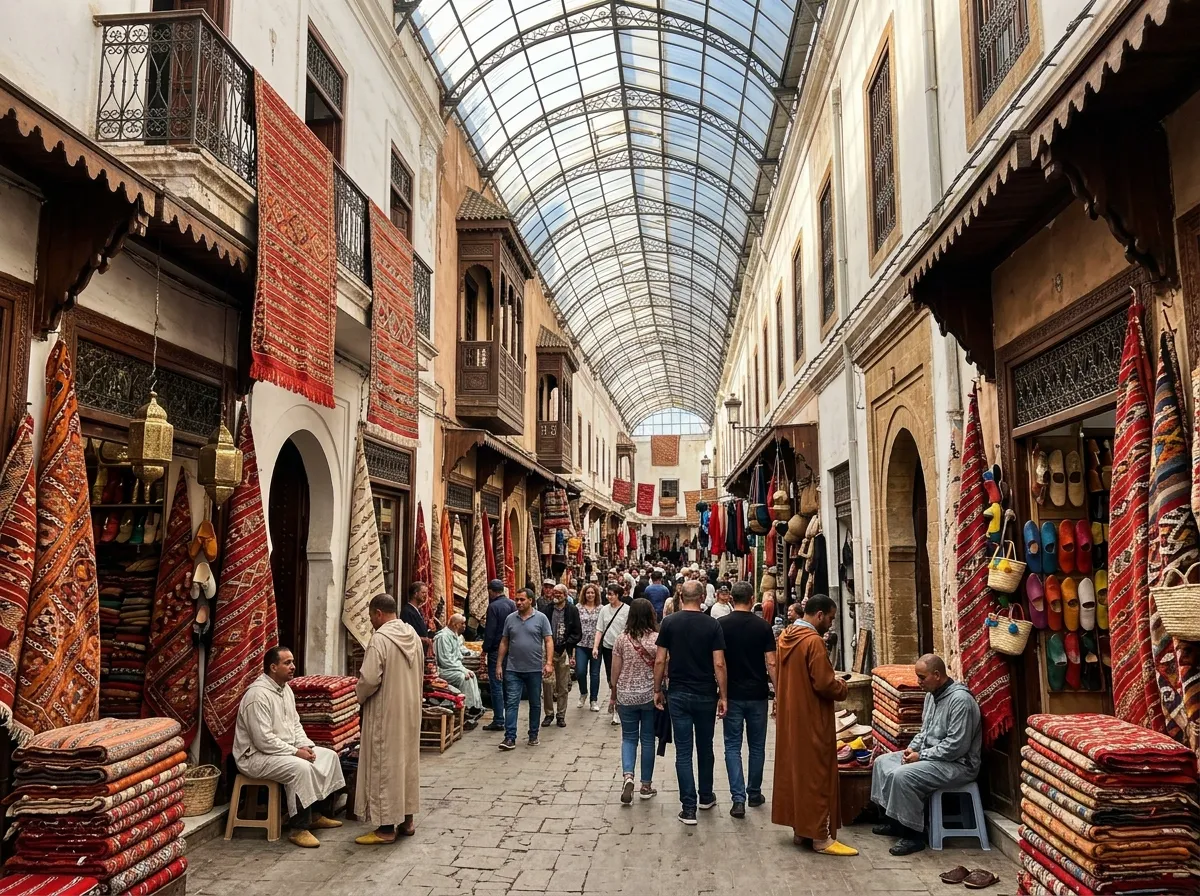
Exit the southern gate of the Kasbah and cross directly into the walled Rabat Medina. Unlike the labyrinthine layout of Fes, Rabat’s old city is laid out on an intuitive grid framed by the 17th-century Andalusian Wall. Stroll along Rue des Consuls, historically named for foreign ambassadors who were mandated to reside here prior to 1912. Today, this avenue anchors the capital’s finest artisans.
Here, indigenous Zemmour and Middle Atlas weavers sell hand-knotted wool rugs without aggressive sales pitches. Inspect cedar woodwork, hammered copper lamps, and authentic leather babouches. For lunch, pull up a wooden chair at a local medina grill near Bab El Had for fresh grilled sardines, stewed lentils, and round crusty khobz bread, or reserve a peaceful courtyard table at Dar Zaki.
Hassan Tower & Mausoleum of Mohammed V
- Transit: Tram Line 1 (Tour Hassan stop)
- Entry: Free (Dress modestly)
- Pace: 1.5 hours • Monumental Site
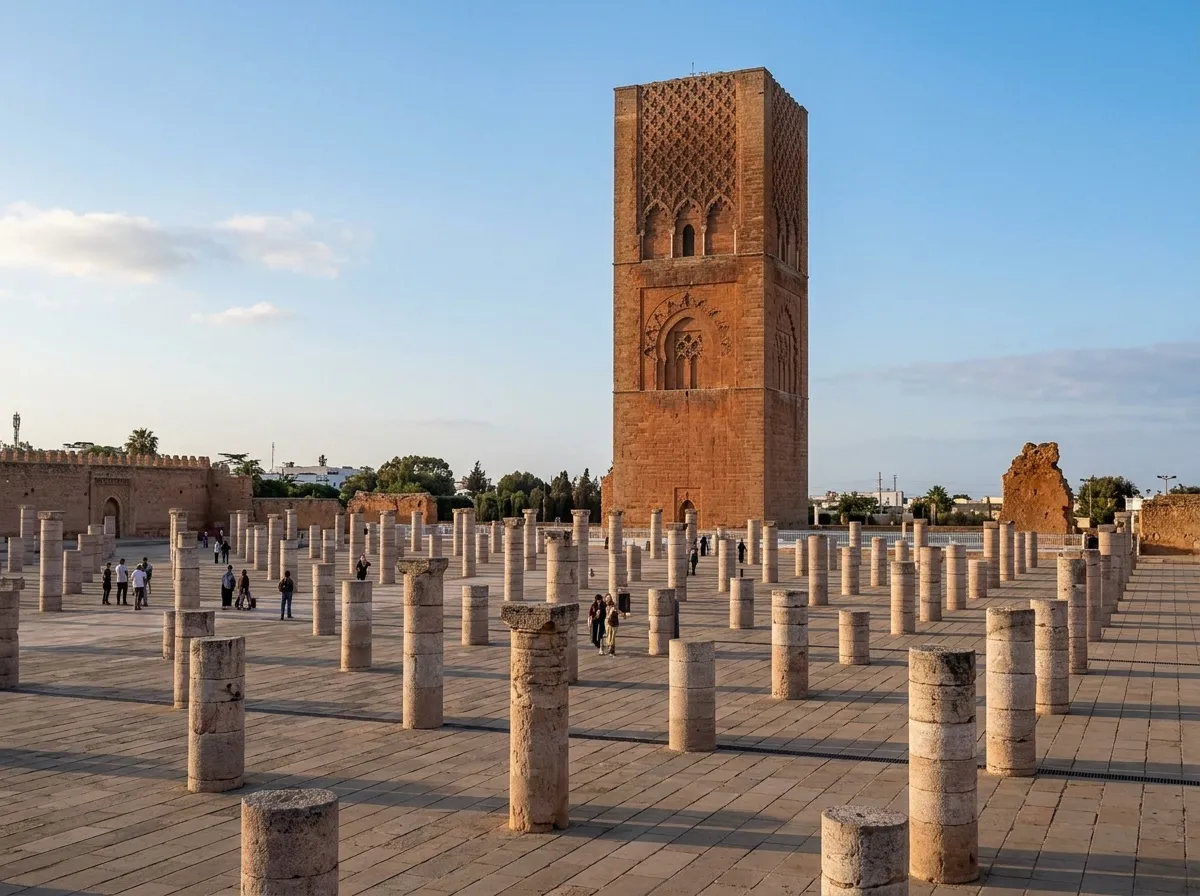
Board the modern Tram Line 1 at Bab Chellah and alight at the Tour Hassan station. This vast esplanade represents one of Islam’s most ambitious historical architectural projects. Sultan Yaqub al-Mansur began constructing what was planned to be the world’s largest mosque in 1195. Following his death in 1199, work stopped; the minaret remains at 44 meters of its projected 86-meter height, rising above a forest of 348 stone columns.
On the eastern end of the complex stands the Mausoleum of Mohammed V, a masterpiece of modern Alaouite architecture. Within white Italian marble walls, Moroccan master craftsmen hand-chiseled intricate zellige tilework and carved cedarwood cupolas leafed in genuine gold. The tomb houses the remains of King Mohammed V and his sons. Dress respectfully with shoulders and knees covered, as noted in this rabat travel guide.
Chellah Necropolis & Roman Sala Colonia
- Transit: Metered blue petit taxi; fare depends on route and current meter tariff
- Entry: 70 MAD regular ticket
- Pace: 2 hours • Historic Ruins
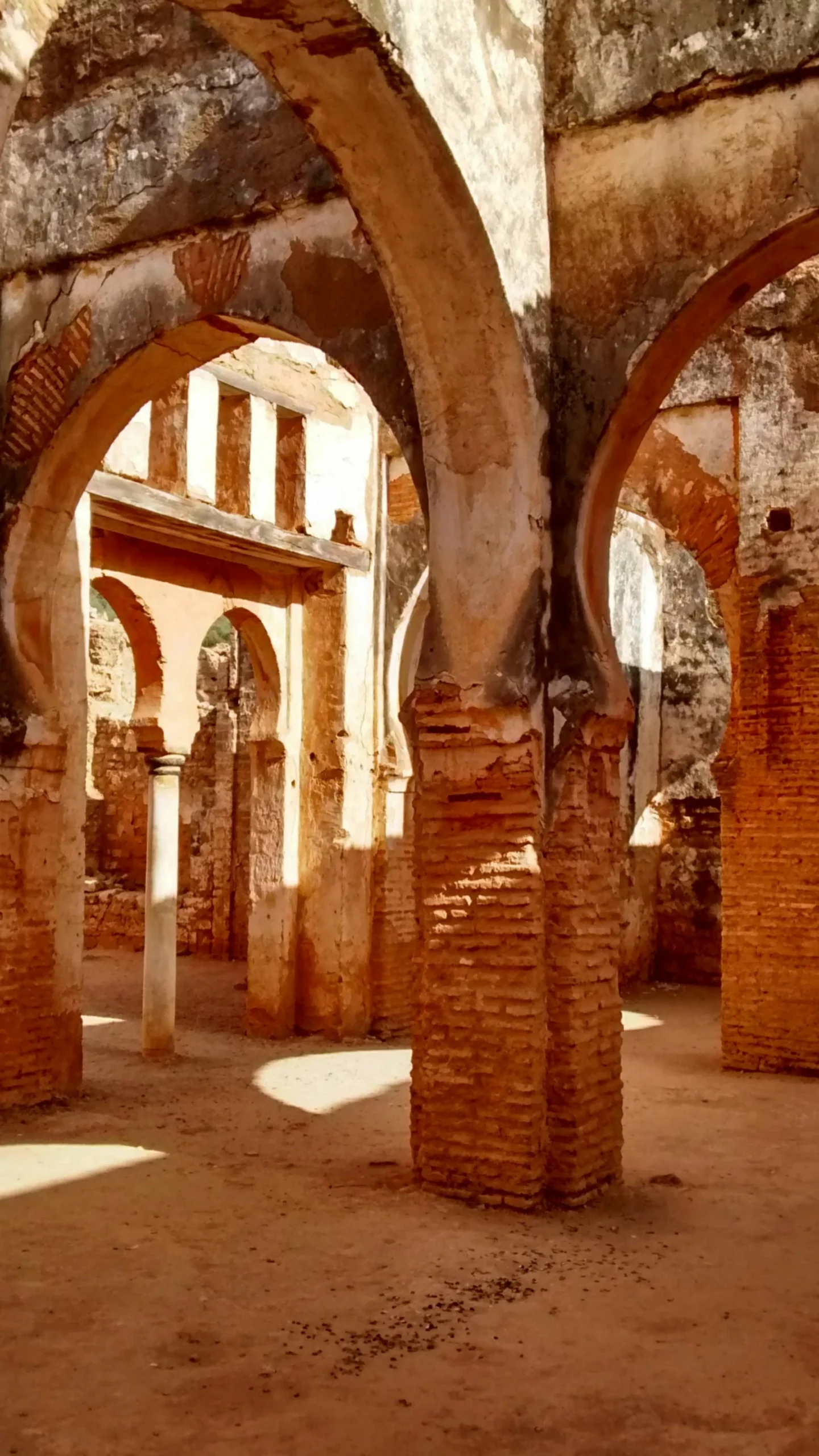
Take a metered taxi two kilometers south of the city walls to Chellah, an ancient multi-layered sanctuary. Settled initially by Phoenicians and later flourishing as the Roman trading post of Sala Colonia, the site retains visible remnants of a 2nd-century decumanus maximus, forum, and triumphal arch. In the 14th century, Marinid Sultan Abu al-Hasan converted the abandoned site into a fortified royal necropolis, adding battlements, mosques, and gardens.
Today, Chellah offers a tranquil retreat where wild fig trees, blackberry brambles, and date palms intertwine with medieval stones. Giant white storks nest year-round atop the crumbling Marinid minaret. For travelers planning broader road expeditions into the Atlas or southwards, as outlined in our 10-day High Atlas and Sahara itinerary, Chellah provides the ideal historical foundation.
Ville Nouvelle & Modernist Cultural Triangle
- Location: Avenue Mohammed V
- Vibe: Broad Avenues & Parisian Cafes
- Pace: 3 hours • Architecture & Art
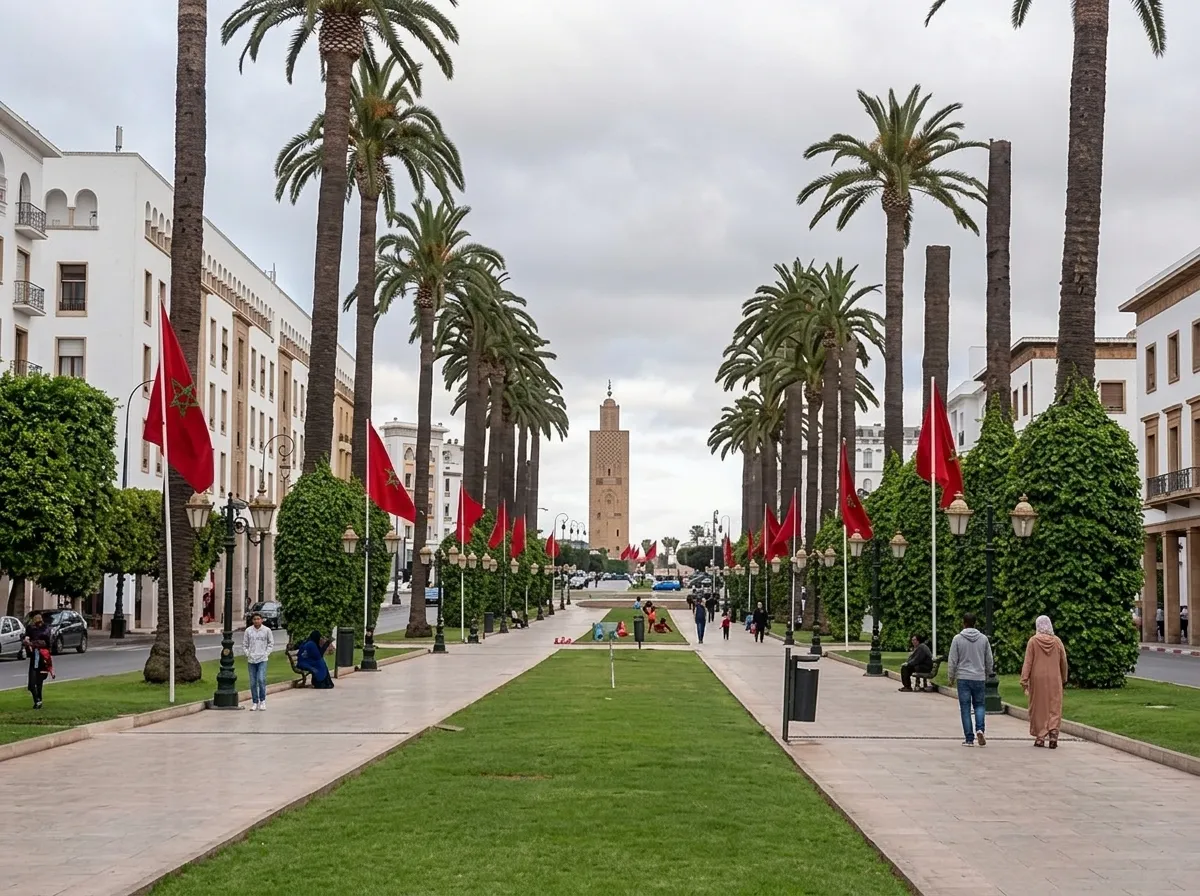
Spend your final afternoon strolling down Avenue Mohammed V in the Ville Nouvelle, recognized as a UNESCO World Heritage site for its pioneering 20th-century urban design. Designed under French urban planner Henri Prost, Rabat harmoniously integrates historic Islamic monuments with modernist garden-city boulevards, Art Deco facades, and Lebanese palm rows.
Stop by the Musée Mohammed VI d’Art Moderne et Contemporain (MMVI), Morocco’s premier modern art institution. The museum hosts permanent collections of revolutionary Moroccan painters including Chaïbia Talal and Jilali Gharbaoui. Wrap up your day at a sidewalk brasserie ordering a nous-nous (half-milk, half-espresso coffee) while observing the diplomatic rhythm of the capital. This rabat travel guide demonstrates why the capital holds a distinct identity among Morocco’s royal cities.
Rabat Travel Guide: What to Pack for the Coast
Atlantic winds, polished stone alleys, and sacred royal sites demand thoughtful packing. Review our recommendations before departing.
Breathable Layers & Modest Covers
Coastal humidity and afternoon ocean breezes require breathable linens and an evening windbreaker. Pack lightweight scarves to cover shoulders at religious monuments.
High-Grip Walking Shoes
Centuries of foot traffic have polished the cobblestones of the Kasbah of the Udayas smooth as glass. Avoid slippery flip-flops; choose supportive walking sneakers.